You’re craving the ultimate soft, chewy caramel cookie. Not the kind that just tastes like sugar, but one with real caramel flavor, golden edges, and a perfectly tender center. You’re not alone and you’re in the right place.
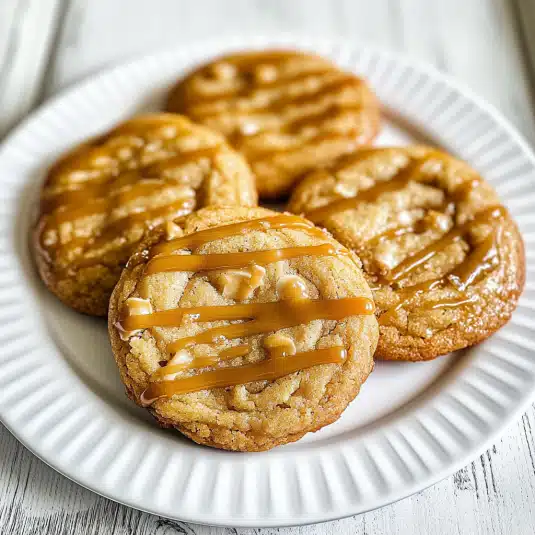
Table of Contents
Why This is the Best Caramel Cookie Recipe
- Soft and chewy in every bite
- Real caramel flavor using more than just sugar
- No-burn, no-fail techniques even for beginners
- Easy ingredients you already have at home
- Flexible methods to match your baking style
- Works for both casual snacks and special gifts
This recipe delivers on taste, texture, and simplicity without cutting corners. You’ll get bakery-quality cookies without stress or mess.
The Secret to Perfect Caramel Cookies: Key Ingredients
Every great cookie starts with smart ingredient choices. Caramel cookies need more than sugar and butter. They need the right caramel and the right sugar to hit that soft, rich texture. Here’s what matters most.
1. Choosing Your Caramel (The Most Important Step)
Not all caramel is the same, and each type gives a different result. Here’s what you need to know.
Caramel Bits
These are small, round pieces made for baking. They’re easy to mix into the dough and won’t leak out or create a sticky mess. The downside is they can be firmer and less gooey when baked.
Soft Caramels (Squares)
Think of brands like Werther’s or any chewy caramel square. These melt beautifully into gooey pockets if you press them into the cookie after baking. They’re more work and need proper timing, but the result is worth it.
Caramel Sauce
Great for adding flavor to the dough or drizzle on top. But it won’t give you that gooey center. It blends into the cookie and makes it soft, not stretchy.
2. Dark vs. Light Brown Sugar
Brown sugar gives cookies their chew. The darker the sugar, the more molasses it contains.
Dark brown sugar brings a deeper flavor and more moisture. It helps create that perfect bend in the center when you break the cookie in half.
Light brown sugar works too, but the flavor will be milder and the cookie slightly less chewy. For the richest, chewiest cookie, dark brown sugar wins every time.
The 3 Best Ways to Make Caramel Cookies (Pros and Cons)
There isn’t just one way to add caramel to cookies. Each method gives a different texture and look. This section breaks down the three best approaches so you can pick the one that matches your taste, time, and skill.
Method 1: The Mix-In (Easiest and Best for Gifting)
This method is simple. Just stir caramel bits directly into your cookie dough. No extra steps or timing tricks.
Pros
Easy to prepare
Fast and beginner-friendly
Cookies stack neatly for storage or gifts
Cons
Less gooey inside
Caramel flavor stays more subtle
Method 2: The Stovetop-Toffee (Richest Flavor)
In this method, you make caramel on the stove with sugar and butter, then mix flour into the warm caramel to form a dough. This gives the deepest flavor, similar to toffee.
Pros
Strong, rich caramel taste
Great for serious flavor fans
Cons
Harder to control the dough
Cools fast, making it tricky to shape
Method 3: The Post-Bake Press (Gooey-est Result)
Bake the cookies without caramel, then press a soft caramel square into each one while they’re still warm. This melts the caramel just enough to create a gooey center.
Pros
Best texture for caramel lovers
Beautiful melted look on top
Cons
Sticky to eat
Not ideal for stacking or packing
Each method works, but they serve different needs. Whether you want ease, flavor, or full-on gooey goodness, there’s a perfect fit for your baking style.
How to Make Caramel Cookies (Our Recommended Method)
We recommend using the mix-in method with caramel bits. It’s easy, clean, and still gives you a soft, chewy cookie with great caramel flavor. Here’s how to do it from start to finish.
Equipment Needed
- Large mixing bowl
- Hand or stand mixer
- Measuring cups and spoons
- Rubber spatula
- Baking sheet
- Parchment paper or silicone baking mat
- Cookie scoop (optional, but helpful)
Ingredients
- 1 cup unsalted butter, softened
- 1 cup dark brown sugar, packed
- ½ cup granulated sugar
- 2 large eggs
- 2 teaspoons vanilla extract
- 2 and ¾ cups all-purpose flour
- 1 teaspoon baking soda
- ½ teaspoon salt
- 1 and ¼ cups caramel bits
Step-by-Step Instructions
- Preheat your oven to 350°F. Line your baking sheet with parchment paper.
- In a large bowl, beat the softened butter, brown sugar, and granulated sugar until smooth and creamy.
- Add the eggs and vanilla extract. Mix again until fully combined.
- In another bowl, whisk together the flour, baking soda, and salt.
- Slowly add the dry ingredients to the wet mixture. Mix on low speed until just combined.
- Fold in the caramel bits with a spatula until they’re spread evenly through the dough.
- Scoop the dough into balls and place them on the prepared baking sheet, leaving space between each cookie.
- Bake for 9 to 11 minutes until the edges are set and the centers look slightly underbaked.
- Let the cookies cool on the baking sheet for 5 minutes, then transfer them to a rack to cool fully.
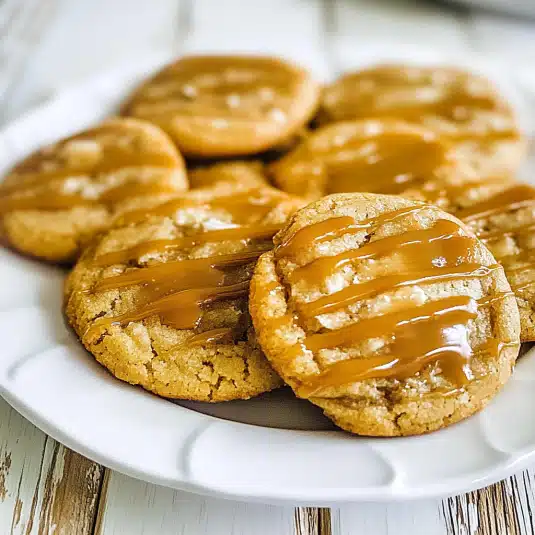
These cookies come out golden, soft, and packed with caramel. Simple to make, easy to love.
Recipe Variations
Want to change things up or make your cookies feel a little more special? Here are some easy ways to twist the basic recipe into something new.
How to Make Salted Caramel Cookies
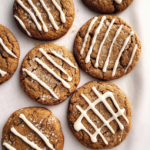
Right after baking, sprinkle a small pinch of flaky sea salt on top of each warm cookie. This brings out the caramel flavor and adds a hint of crunch. It’s a simple trick that makes a big difference.
Popular Add-Ins
These mix-ins pair perfectly with caramel and can be added to the dough with the caramel bits.
White Chocolate Chips
Add sweetness and creamy texture that contrasts nicely with the chewy caramel.
Semi-Sweet Chocolate Chips
For those who like balance. The slight bitterness from the chocolate offsets the caramel.
Toasted Pecans
Bring in a nutty crunch that makes the cookie feel richer and more complex.
You can mix and match any of these add-ins or even try all three together. Just keep the total add-ins under two cups so the dough stays easy to work with.
Troubleshooting and Expert Tips
Even simple recipes can go sideways. Here’s how to avoid the most common caramel cookie problems and get bakery-level results every time.
Tip 1: Don’t Overbake
This is the number one reason cookies turn out dry. Take them out when the centers still look slightly soft. They will firm up as they cool.
FAQ: Why did my caramel melt and burn?
You may have used caramel squares without pressing them in after baking. Some types of caramel are too soft to hold up inside the oven. Caramel bits are more heat-stable and better for baking directly into the dough.
FAQ: Why is my dough crumbly?
This usually means too much flour. Always spoon flour into your measuring cup, then level it off. If you used the stovetop method, the dough may have cooled too much before shaping.
FAQ: Why are my cookies flat?
Warm butter is often the cause. Make sure your butter is soft but not melted. Also, chill the dough for 15 to 30 minutes if your kitchen is warm. This helps the cookies keep their shape while baking.
Follow these tips and your caramel cookies will come out just right. Every time.
Print
Caramel Cookies
- Total Time: 25 minutes
- Yield: 24 cookies 1x
- Diet: Vegetarian
Description
These soft and chewy caramel cookies are packed with rich flavor, golden edges, and gooey caramel bits for the perfect melt-in-your-mouth treat every time.
Ingredients
- 1 cup unsalted butter, softened
- 1 cup dark brown sugar, packed
- ½ cup granulated sugar
- 2 large eggs
- 2 teaspoons vanilla extract
- 2 and ¾ cups all-purpose flour
- 1 teaspoon baking soda
- ½ teaspoon salt
- 1 and ¼ cups caramel bits
Instructions
- Preheat your oven to 350°F. Line your baking sheet with parchment paper.
- In a large bowl, beat the softened butter, brown sugar, and granulated sugar until smooth and creamy.
- Add the eggs and vanilla extract. Mix again until fully combined.
- In another bowl, whisk together the flour, baking soda, and salt.
- Slowly add the dry ingredients to the wet mixture. Mix on low speed until just combined.
- Fold in the caramel bits with a spatula until they’re spread evenly through the dough.
- Scoop the dough into balls and place them on the prepared baking sheet, leaving space between each cookie.
- Bake for 9 to 11 minutes until the edges are set and the centers look slightly underbaked.
- Let the cookies cool on the baking sheet for 5 minutes, then transfer them to a rack to cool fully.
Notes
To make salted caramel cookies, sprinkle a pinch of flaky sea salt on top of each cookie right after baking. For add-ins, mix in white or semi-sweet chocolate chips, or toasted pecans—keep total add-ins under 2 cups.
- Prep Time: 15 minutes
- Cook Time: 10 minutes
- Category: Dessert
- Method: Baking
- Cuisine: American
Nutrition
- Serving Size: 1 cookie
- Calories: 174 kcal
- Sugar: 9 g
- Sodium: 182 mg
- Fat: 9 g
- Saturated Fat: 5 g
- Carbohydrates: 21 g
- Protein: 1 g
- Cholesterol: 24 mg
How to Store, Freeze, and Make Ahead
Caramel cookies are best fresh, but with the right steps, you can keep them tasting great for days or even weeks. Here’s how to store them properly and make ahead when needed.
Storing Baked Cookies
Place cooled cookies in an airtight container. Keep them at room temperature for up to five days. To keep them soft, add a slice of bread to the container. The cookies will pull in the moisture without getting soggy.
Freezing Cookie Dough
Scoop the dough into balls and place them on a tray lined with parchment paper. Freeze until solid, then transfer to a freezer-safe bag or container. Label with the date. You can freeze the dough for up to three months. Bake straight from frozen, adding one or two extra minutes to the baking time.
Freezing Baked Cookies
Let the cookies cool fully, then layer them in a freezer-safe container with parchment paper between each layer. Freeze for up to two months. Thaw at room temperature or warm them slightly in the microwave for that just-baked feel.
These tips make it easy to enjoy caramel cookies anytime you want, without starting from scratch.
Conclusion
These caramel cookies bring together soft centers, golden edges, and real caramel flavor in a way that’s hard to beat. You get the perfect balance of chewiness and sweetness with every bite. Whether you’re using caramel bits for ease or soft caramels for that extra gooey touch, this recipe lets you bake with confidence.
Tried the recipe? Leave a star rating and drop a comment below. Your feedback helps others and keeps the recipe growing.
Sharing is caring too. Post your cookie photos on Pinterest or Facebook and tag your friends.
What variation did you try? Did you go with white chocolate chips or toasted pecans? Let us know below. We love hearing how you made the recipe your own.
Let’s bake together! I will explain all the steps in detail in the written recipe. If you try this recipe, don’t forget to tag me on Facebook, and you can also follow me on Pinterest.
FAQS
What causes caramel to crystallize?
Crystals form when sugar is disturbed during cooking. Stirring too much or getting even a tiny bit of sugar on the pan sides can trigger it. Using a wet pastry brush to clean the pan sides or adding a little corn syrup helps prevent this.
What are common caramel mistakes?
Burning the sugar by using too much heat is a top mistake. Another is stirring too often, which causes grainy caramel. Skipping a thermometer or guessing the color can also lead to uneven results.
Why does my homemade caramel taste bitter?
This happens when the sugar cooks too long or gets too dark. Caramel should be golden brown, not deep brown. Pull it off the heat once it smells rich and sweet, not smoky.
What is the difference between wet and dry caramel?
Wet caramel starts with sugar and water. It cooks slower and is less likely to burn. Dry caramel uses only sugar. It heats faster and gives deeper flavor but is trickier to manage.
What makes cookies more chewy?
Moisture and brown sugar are key. Using dark brown sugar and not overbaking keeps the cookies soft and chewy. Adding an extra egg yolk can also boost chewiness.
What makes caramel hard or soft?
It depends on the final temperature when cooking. Lower temperatures make soft caramel, while higher heat creates firmer candy. For baking, soft caramel is best so it melts into the cookie without becoming brittle.