
If you’ve been searching for the best cottage cheese recipes for weight loss, you’re in the right place. Cottage cheese is one of the easiest foods to add to a healthy eating plan because it packs a large amount of protein into a relatively small number of calories. This combination can help you stay full longer, support muscle maintenance during a calorie deficit, and reduce the urge to snack between meals.
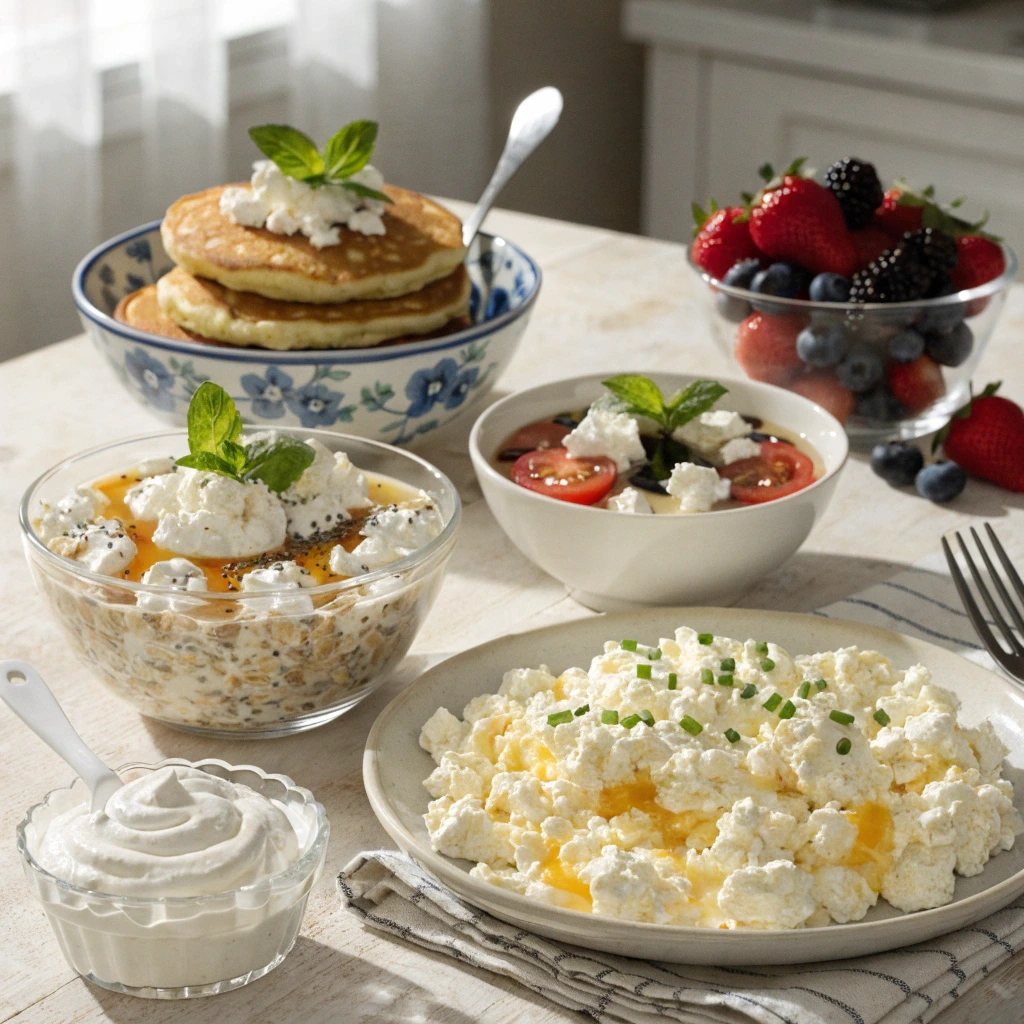
I’ve used cottage cheese in meal prep for years, especially during periods when I wanted to increase protein intake without adding many extra calories. One reason it works so well is its versatility. You can enjoy it in sweet breakfasts, savory lunches, filling dinners, and even high-protein desserts.
Another advantage is the casein protein found in cottage cheese. Casein digests slowly, which may help keep hunger under control for longer periods. Combined with its low glycemic impact, cottage cheese can fit into many eating styles, including low-carb, high-protein, and vegetarian meal plans.
In this guide, you’ll find high-protein cottage cheese recipes for weight loss, complete cooking instructions, macro breakdowns, and practical tips for improving the texture if you normally dislike cottage cheese. Whether you want a quick breakfast, a healthy snack, or a satisfying dinner, there is a recipe here to match your goal.
Table of Contents
Key Takeaways
| Benefit | Why It Matters for Weight Loss |
|---|---|
| High in Protein | Helps increase fullness and supports muscle maintenance |
| Relatively Low in Calories | Makes it easier to stay within a calorie deficit |
| Contains Casein Protein | Digests slowly and may help reduce hunger |
| Versatile Ingredient | Works in breakfast, lunch, dinner, snacks, and desserts |
| Low Glycemic Impact | May help support stable blood glucose levels |
| Vegetarian Friendly | Easy protein source for meat-free diets |
Cottage Cheese vs. Greek Yogurt
Many people compare cottage cheese and Greek yogurt when choosing a high-protein food. Both can support weight loss, but there are some important differences.
| Dairy Option (1/2 Cup) | Calories | Protein | Total Carbs | Key Benefit |
|---|---|---|---|---|
| Cottage Cheese | Approximately 107 | 12g | 3.7g | Rich in slow-digesting casein protein |
| Greek Yogurt | Approximately 130 | 12g | 6g | Tangy flavor and probiotic content |
Both options can fit into a healthy eating plan. Cottage cheese stands out for its lower carbohydrate content and high casein protein concentration, while Greek yogurt is often chosen for its creamy texture and probiotic benefits.
Why Cottage Cheese Is a Weight Loss Powerhouse
Cottage cheese has earned a strong reputation among nutrition professionals and fitness enthusiasts because it offers a rare combination of high protein, relatively low calories, and excellent versatility. Whether your goal is fat loss, muscle maintenance, or better appetite control, cottage cheese can fit into a balanced eating plan.
One of the main reasons cottage cheese supports weight loss is its protein content. Protein is known to increase fullness after meals, which may help reduce overall calorie intake throughout the day. When people feel satisfied for longer periods, they are less likely to reach for high-calorie snacks between meals.
Another benefit is its relatively low calorie density. You can enjoy a satisfying serving without consuming a large number of calories. This makes cottage cheese a practical choice for people trying to maintain a calorie deficit while still feeling full and energized.
It also pairs well with fruits, vegetables, herbs, spices, oats, eggs, and whole grains. This flexibility makes it easy to create healthy meals for breakfast, lunch, dinner, snacks, and desserts without getting bored.
For even better satiety and fiber intake, many people combine cottage cheese with ingredients like chia seeds. You can learn more in our guide on chia seeds for weight loss.
The Nutritional Profile: Casein Protein, Low Calories, and Probiotics
Cottage cheese contains casein protein, a slow-digesting dairy protein that releases amino acids gradually over time. This slower digestion rate can help extend feelings of fullness and support muscle recovery between meals.
A typical half-cup serving of low-fat cottage cheese provides approximately:
| Nutrient | Amount |
|---|---|
| Calories | 90 to 120 |
| Protein | 12 to 14 grams |
| Carbohydrates | 3 to 5 grams |
| Fat | 1 to 5 grams |
Protein plays an important role during weight loss because the body may lose muscle tissue when calorie intake drops too low. Eating protein-rich foods such as cottage cheese helps support muscle maintenance while reducing body fat.
Many cottage cheese products also contain live cultures that contribute to gut health. These beneficial bacteria may support digestion and overall wellness when included as part of a balanced diet.
Blood Sugar Stabilization: How High-Protein Dairy Supports Balanced Energy
Another reason cottage cheese works well for weight management is its effect on blood glucose levels. Foods rich in protein generally digest more slowly than highly processed carbohydrate foods.
When protein is included in a meal, it can help slow the absorption of carbohydrates. This process may support a steadier insulin response and help reduce rapid changes in blood sugar levels.
For people following low-carb diets or looking to reduce blood sugar spikes after meals, cottage cheese can be a useful addition to daily eating habits. Pairing it with fiber-rich foods such as berries, vegetables, chia seeds, or oats can create balanced meals that promote satiety and steady energy.
This combination of high-quality protein, moderate calories, and blood sugar support is one reason cottage cheese remains a popular food among people working toward sustainable weight loss goals.
The Blended Secret: How to Fix the Lumpy Texture of Cottage Cheese
Many people know that cottage cheese is packed with protein, but they still avoid it because of its texture. The small curds can feel unusual, especially for anyone who prefers smooth foods such as Greek yogurt, cream cheese, or sour cream.
The good news is that this problem is easy to solve.
Simply place cottage cheese in a blender or food processor and blend for 30 to 60 seconds. The curds break down into a smooth, creamy consistency that looks and feels completely different from traditional cottage cheese.
Once blended, cottage cheese becomes a versatile ingredient that can be used in both sweet and savory recipes. Many people are surprised by how similar it becomes to other creamy dairy products.
How to Make Blended Cottage Cheese
Ingredients
- 1 cup cottage cheese
Instructions
- Add the cottage cheese to a blender or food processor.
- Blend for 30 to 60 seconds.
- Stop and scrape down the sides if needed.
- Continue blending until completely smooth.
- Use immediately or store in an airtight container in the refrigerator.
Why Blended Cottage Cheese Works So Well
Blending changes the texture without changing the nutritional value. You still get the same protein, amino acids, and nutrients, but in a form that is easier for many people to enjoy.
Blended cottage cheese can be used as:
- A base for high-protein pasta sauces
- A replacement for sour cream
- A substitute for cream cheese in lighter recipes
- A topping for baked potatoes
- A protein-rich dip for vegetables
- A creamy addition to smoothies
- A base for healthy desserts
Low-Fat vs Full-Fat Cottage Cheese for Weight Loss
Both options can fit into a weight loss plan, but they serve slightly different purposes.
| Type | Best For |
|---|---|
| Low-Fat Cottage Cheese | Lower calorie meals and snacks |
| Full-Fat Cottage Cheese | Extra richness and longer-lasting fullness |
If your main goal is maintaining a calorie deficit, low-fat cottage cheese is usually the better choice. If you struggle with hunger between meals, full-fat cottage cheese may help you feel satisfied for longer.
This simple blending method opens the door to dozens of high-protein cottage cheese recipes for weight loss. It also makes cottage cheese far more appealing for people who previously avoided it because of the texture.
High-Protein Cottage Cheese Breakfast Recipes
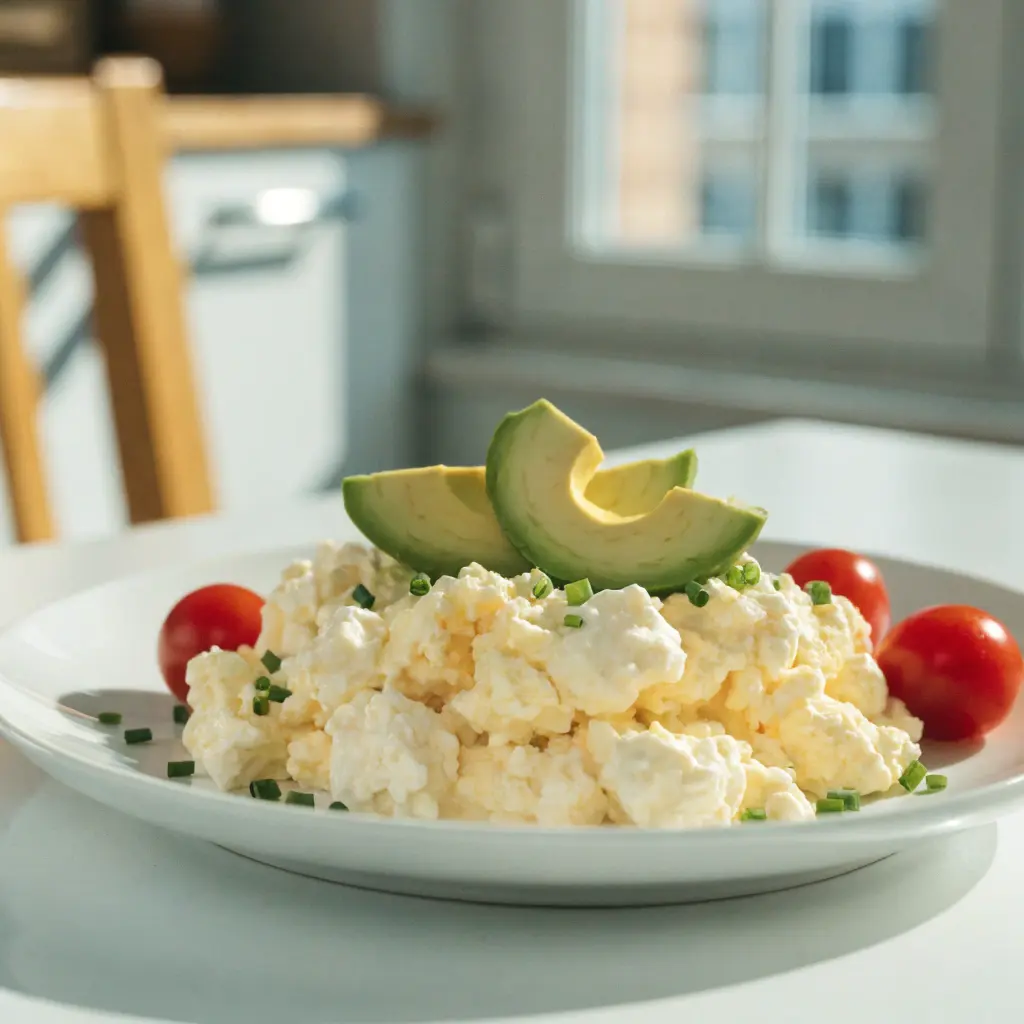
Starting your morning with a protein-rich meal can help control hunger, support muscle maintenance, and make it easier to stay within your daily calorie target. Cottage cheese works especially well at breakfast because it pairs easily with eggs, oats, fruit, and whole grains.
1. Fluffy Cottage Cheese Scrambled Eggs
If you want a quick breakfast that delivers plenty of protein without many calories, these cottage cheese scrambled eggs are an excellent choice. The cottage cheese melts into the eggs while cooking, creating a soft and fluffy texture.
Ingredients
- 2 large eggs
- 1/2 cup low-fat cottage cheese
- 1 teaspoon olive oil or cooking spray
- 1 tablespoon chopped chives
- Salt to taste
- Black pepper to taste
Step-by-Step Instructions
- Crack the eggs into a medium bowl.
- Add the cottage cheese, salt, and black pepper.
- Whisk until well combined.
- Heat a non-stick skillet over medium heat.
- Add the olive oil or cooking spray.
- Pour the egg mixture into the skillet.
- Stir gently with a spatula as the eggs cook.
- Continue stirring until the eggs are fully cooked but still soft.
- Remove from heat immediately.
- Sprinkle with chopped chives before serving.
Nutritional Profile Per Serving
| Nutrient | Amount |
|---|---|
| Calories | 245 |
| Protein | 21g |
| Carbohydrates | 4g |
| Fat | 16g |
Why This Recipe Supports Weight Loss
- High protein content helps increase fullness.
- Quick preparation makes healthy eating easier.
- Low carbohydrate content fits many eating styles.
- Provides high-quality amino acids that support muscle maintenance during a calorie deficit.
Recipe Tip
For an even creamier texture, blend the cottage cheese before mixing it with the eggs. This creates a smooth consistency while keeping all the protein benefits intact.
2. Blender Cottage Cheese and Oat Pancakes
These cottage cheese and oat pancakes are soft, filling, and packed with protein. Unlike traditional pancakes made with refined flour, this version combines cottage cheese and oats to create a breakfast that keeps you satisfied for longer.
The batter comes together in minutes using a blender, making it a practical option for busy mornings.
Ingredients
- 1/2 cup low-fat cottage cheese
- 1/2 cup rolled oats
- 2 large eggs
- 1/2 teaspoon baking powder
- 1/2 teaspoon cinnamon
- 1 teaspoon vanilla extract
- Cooking spray or 1 teaspoon olive oil
Step-by-Step Instructions
- Add the cottage cheese, oats, eggs, baking powder, cinnamon, and vanilla extract to a blender.
- Blend until the mixture becomes smooth.
- Allow the batter to rest for 2 to 3 minutes.
- Heat a non-stick skillet over medium heat.
- Lightly coat the pan with cooking spray or olive oil.
- Pour small portions of batter onto the skillet.
- Cook for 2 to 3 minutes on the first side.
- Flip carefully once bubbles appear on the surface.
- Cook for another 1 to 2 minutes until golden brown.
- Transfer to a plate and serve warm.
Nutritional Profile Per Serving
| Nutrient | Amount |
|---|---|
| Calories | 320 |
| Protein | 23g |
| Carbohydrates | 25g |
| Fat | 13g |
Why This Recipe Supports Weight Loss
- High protein content helps control hunger.
- Oats add fiber that promotes fullness.
- Contains slow-digesting casein protein from cottage cheese.
- Made with simple ingredients that fit easily into meal prep plans.
Serving Ideas
Try topping these pancakes with:
- Fresh strawberries
- Blueberries
- Sliced banana
- A spoonful of blended cottage cheese
- A light sprinkle of cinnamon
For extra protein, serve with a side of cottage cheese and fresh fruit.
3. High-Protein Cottage Cheese Overnight Oats
This cottage cheese overnight oats recipe is ideal for anyone who wants a grab-and-go breakfast that requires almost no morning preparation. The combination of oats, cottage cheese, and fruit creates a balanced meal rich in protein, fiber, and slow-digesting carbohydrates.
Because the ingredients sit overnight, the oats become soft and creamy while the cottage cheese blends naturally into the mixture.
Ingredients
- 1/2 cup low-fat cottage cheese
- 1/2 cup rolled oats
- 1/2 cup unsweetened almond milk
- 1/2 cup mixed berries
- 1 teaspoon chia seeds
- 1/2 teaspoon vanilla extract
- 1 teaspoon honey (optional)
Step-by-Step Instructions
- Add the cottage cheese, oats, almond milk, chia seeds, and vanilla extract to a jar or container.
- Stir thoroughly until all ingredients are combined.
- Fold in half of the berries.
- Cover the container with a lid.
- Place it in the refrigerator overnight or for at least 6 hours.
- Remove from the refrigerator before serving.
- Top with the remaining berries.
- Add honey if desired.
- Serve chilled.
Nutritional Profile Per Serving
| Nutrient | Amount |
|---|---|
| Calories | 295 |
| Protein | 19g |
| Carbohydrates | 33g |
| Fat | 8g |
Why This Recipe Supports Weight Loss
- High protein content helps keep hunger under control.
- Oats and chia seeds provide fiber that promotes fullness.
- Easy meal prep reduces the temptation to skip breakfast.
- Balanced combination of protein, carbohydrates, and healthy fats.
- Supports steady energy throughout the morning.
Customization Ideas
You can easily change the flavor while maintaining a healthy macro profile.
Try adding:
- Diced apples and cinnamon
- Sliced peaches
- Raspberries
- Pumpkin spice seasoning
- Unsweetened cocoa powder
- Chopped almonds or walnuts
For readers who dislike the texture of cottage cheese, blend it before mixing with the oats. This creates a smoother consistency that resembles a creamy yogurt-based breakfast bowl while keeping the same protein content.
If you enjoy meal-prep breakfasts, you may also love these pumpkin overnight oats, another filling option packed with fiber and long-lasting energy.
Savory Cottage Cheese Recipes for Lunch & Dinner
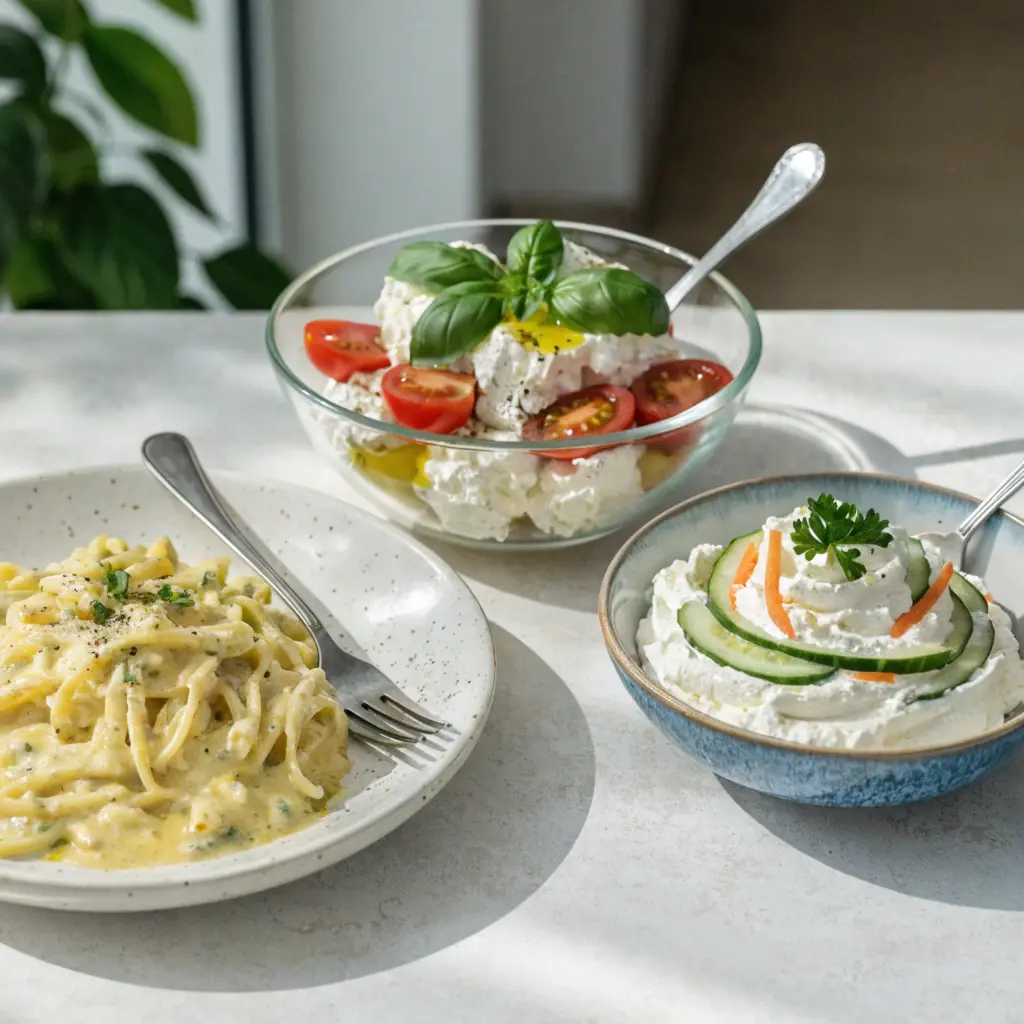
Cottage cheese is often associated with breakfast, but it can be just as useful for lunch and dinner. Its mild flavor makes it easy to combine with vegetables, herbs, whole grains, and lean proteins. It also works as a creamy ingredient in sauces and bowls without adding excessive calories.
These savory cottage cheese recipes for weight loss are designed to provide satisfying meals that are rich in protein and easy to prepare.
4. Creamy Blended Cottage Cheese Pasta Sauce
Traditional cream-based pasta sauces can contain a significant amount of calories and fat. This cottage cheese pasta sauce delivers a creamy texture and high protein content while keeping the calorie count much lower.
Blending the cottage cheese creates a smooth sauce that coats the pasta beautifully and adds a rich flavor without the heaviness of traditional cream sauces.
Ingredients
- 1 cup low-fat cottage cheese
- 8 ounces whole wheat pasta
- 2 cloves garlic, minced
- 1 tablespoon grated Parmesan cheese
- 1 tablespoon olive oil
- 1 teaspoon Italian seasoning
- Salt to taste
- Black pepper to taste
- 2 tablespoons reserved pasta water
Step-by-Step Instructions
- Cook the pasta according to the package instructions.
- Reserve 2 tablespoons of pasta water before draining.
- Add the cottage cheese, garlic, Parmesan cheese, Italian seasoning, salt, pepper, and reserved pasta water to a blender.
- Blend until completely smooth.
- Heat olive oil in a large skillet over low heat.
- Pour the blended sauce into the skillet.
- Stir gently for 2 to 3 minutes until warmed through.
- Add the cooked pasta.
- Toss until the pasta is evenly coated.
- Serve immediately.
Nutritional Profile Per Serving
| Nutrient | Amount |
|---|---|
| Calories | 390 |
| Protein | 25g |
| Carbohydrates | 43g |
| Fat | 12g |
Why This Recipe Supports Weight Loss
- High protein content promotes satiety.
- Lower in calories than many cream-based pasta sauces.
- Whole wheat pasta contributes fiber for added fullness.
- Blended cottage cheese creates a smooth texture that appeals even to people who dislike traditional cottage cheese.
Recipe Tip
Add spinach, mushrooms, broccoli, or grilled chicken to increase volume and protein while keeping the meal balanced and satisfying.
5. 5-Minute Cottage Cheese Caprese Bowl
This cottage cheese Caprese bowl is one of the fastest high-protein lunches you can make. It combines creamy cottage cheese with fresh tomatoes, basil, and a touch of balsamic glaze for a meal that feels light yet satisfying.
The recipe requires no cooking, making it perfect for busy workdays, meal prep, or a quick lunch when you want something nutritious without spending time in the kitchen.
Ingredients
- 1 cup low-fat cottage cheese
- 1 cup cherry tomatoes, halved
- 8 fresh basil leaves, chopped
- 1 teaspoon balsamic glaze
- 1 teaspoon extra virgin olive oil
- Salt to taste
- Black pepper to taste
Step-by-Step Instructions
- Add the cottage cheese to a serving bowl.
- Arrange the halved cherry tomatoes on top.
- Sprinkle the chopped basil over the tomatoes.
- Drizzle with olive oil.
- Add the balsamic glaze.
- Season with salt and black pepper.
- Serve immediately.
Nutritional Profile Per Serving
| Nutrient | Amount |
|---|---|
| Calories | 240 |
| Protein | 28g |
| Carbohydrates | 10g |
| Fat | 10g |
Why This Recipe Supports Weight Loss
- Delivers a large amount of protein for relatively few calories.
- Requires no cooking or special equipment.
- Tomatoes add volume and nutrients without significantly increasing calories.
- Supports fullness, making it easier to manage hunger between meals.
- Fits well into low-carb and high-protein eating plans.
Recipe Tip
For a more substantial meal, add sliced cucumber, grilled chicken breast, or a handful of mixed greens. These additions increase volume and protein while keeping the dish balanced.
Meal Prep Note
Store the tomatoes and cottage cheese separately if preparing in advance. Combine the ingredients just before eating to maintain the freshest texture and flavor.
6. Low-Carb Cottage Cheese Frittata
This low-carb cottage cheese frittata is a filling dinner that combines eggs, vegetables, and cottage cheese into one protein-packed dish. It is simple to prepare, easy to customize, and works well for meal prep throughout the week.
The cottage cheese adds moisture and protein, helping create a soft texture while keeping the recipe suitable for low-carb eating plans.
Ingredients
- 6 large eggs
- 1 cup low-fat cottage cheese
- 1 cup spinach, chopped
- 1/2 red bell pepper, diced
- 1/4 cup onion, finely chopped
- 1 tablespoon olive oil
- 1/2 teaspoon garlic powder
- Salt to taste
- Black pepper to taste
Step-by-Step Instructions
- Preheat the oven to 375°F (190°C).
- Heat the olive oil in an oven-safe skillet over medium heat.
- Add the onion and bell pepper.
- Cook for 3 to 4 minutes until softened.
- Stir in the spinach and cook for 1 minute.
- In a large bowl, whisk the eggs.
- Add the cottage cheese, garlic powder, salt, and black pepper.
- Mix until combined.
- Pour the egg mixture into the skillet over the vegetables.
- Cook for 2 minutes without stirring.
- Transfer the skillet to the oven.
- Bake for 15 to 18 minutes or until the center is set.
- Remove from the oven and allow it to cool slightly.
- Slice and serve.
Nutritional Profile Per Serving
| Nutrient | Amount |
|---|---|
| Calories | 220 |
| Protein | 19g |
| Carbohydrates | 5g |
| Fat | 14g |
Based on 4 servings per frittata.
Why This Recipe Supports Weight Loss
- High protein content promotes satiety.
- Low carbohydrate content may help support stable energy levels.
- Vegetables add volume without many calories.
- Suitable for lunch, dinner, or meal prep.
- Helps support muscle maintenance while following a calorie deficit.
Recipe Tip
You can easily change the vegetables based on what you have available. Mushrooms, zucchini, broccoli, and kale all work well in this recipe while keeping the calorie count relatively low.
Meal Prep Note
Store leftovers in an airtight container in the refrigerator for up to four days. The frittata can be eaten cold or reheated for a quick high-protein meal.
Weight Loss Cottage Cheese Snacks & Dips
Healthy snacks can make a big difference when trying to lose weight. The right snack helps control hunger between meals and may reduce the temptation to reach for highly processed foods.
Cottage cheese is an excellent snack ingredient because it contains protein, relatively few calories, and a mild flavor that works well with both savory and sweet additions. When blended, it also becomes a creamy base for dips that pair perfectly with fresh vegetables.
7. Garlic & Herb Whipped Cottage Cheese Dip
This whipped cottage cheese dip is smooth, creamy, and packed with flavor. It works as a healthy alternative to many store-bought dips while delivering significantly more protein.
Serve it with sliced vegetables for a satisfying snack that supports weight loss goals without sacrificing taste.
Ingredients
- 1 cup low-fat cottage cheese
- 1 clove garlic, minced
- 1 tablespoon fresh parsley, chopped
- 1 tablespoon fresh chives, chopped
- 1 teaspoon lemon juice
- 1/4 teaspoon onion powder
- Salt to taste
- Black pepper to taste
Step-by-Step Instructions
- Add the cottage cheese to a blender or food processor.
- Add the garlic, parsley, chives, lemon juice, onion powder, salt, and black pepper.
- Blend until completely smooth.
- Taste and adjust the seasoning if needed.
- Transfer to a serving bowl.
- Serve immediately or chill for 30 minutes before serving.
Nutritional Profile Per Serving
| Nutrient | Amount |
|---|---|
| Calories | 120 |
| Protein | 14g |
| Carbohydrates | 4g |
| Fat | 3g |
Based on 2 servings.
Why This Recipe Supports Weight Loss
- High protein content helps increase fullness.
- Low calorie count makes portion control easier.
- Fresh herbs add flavor without adding many calories.
- Works well with nutrient-dense vegetables.
- Quick preparation encourages healthier snacking habits.
Best Dippers for Weight Loss
Pair this dip with:
- Cucumber slices
- Carrot sticks
- Celery sticks
- Bell pepper strips
- Cherry tomatoes
- Radish slices
These vegetables add crunch, fiber, and volume while keeping the overall snack light and satisfying.
Recipe Tip
For extra creaminess, chill the dip for 30 minutes before serving. The flavors blend together beautifully, creating a richer taste without increasing the calorie content.
Looking for another protein-rich snack? These peanut butter protein balls are perfect for curbing cravings between meals.
8. High-Protein Fruit & Almond Cottage Cheese Bowl
If you are looking for a sweet cottage cheese recipe for weight loss, this fruit and almond bowl is a great choice. It combines creamy cottage cheese, fresh fruit, and crunchy almonds into a balanced snack that delivers protein, fiber, and healthy fats.
This recipe works well as a mid-morning snack, an afternoon pick-me-up, or even a light breakfast when you need something quick and satisfying.
Ingredients
- 1 cup low-fat cottage cheese
- 1/2 cup blueberries
- 1/2 cup strawberries, sliced
- 1 tablespoon sliced almonds
- 1 teaspoon chia seeds
- 1 teaspoon honey (optional)
- 1/2 teaspoon cinnamon
Step-by-Step Instructions
- Add the cottage cheese to a serving bowl.
- Top with the blueberries and sliced strawberries.
- Sprinkle the almonds over the fruit.
- Add the chia seeds.
- Dust lightly with cinnamon.
- Drizzle with honey if desired.
- Serve immediately.
Nutritional Profile Per Serving
| Nutrient | Amount |
|---|---|
| Calories | 255 |
| Protein | 28g |
| Carbohydrates | 18g |
| Fat | 8g |
Why This Recipe Supports Weight Loss
- High protein content helps promote satiety.
- Berries provide fiber and natural sweetness.
- Almonds contribute healthy fats that help make the snack more satisfying.
- Contains fewer added sugars than many packaged snack foods.
- Easy portion control supports a calorie deficit.
Best Fruit Pairings With Cottage Cheese
Cottage cheese pairs well with many fruits, allowing you to create different flavor combinations throughout the week.
Popular options include:
- Blueberries
- Strawberries
- Raspberries
- Blackberries
- Peaches
- Apples
- Pears
- Pineapple
Choosing whole fruit instead of sweetened toppings can help keep calories under control while adding vitamins, minerals, and fiber.
Recipe Tip
If you prefer a smoother texture, blend the cottage cheese before assembling the bowl. This creates a creamy base that resembles a protein-rich fruit yogurt while maintaining the same nutritional benefits.
FAQs
Is cottage cheese good for losing weight?
Yes, cottage cheese can be an excellent food for weight loss. It is high in protein and relatively low in calories, making it easier to stay full while maintaining a calorie deficit. The protein content may also help support muscle maintenance during fat loss.
What can I mix with cottage cheese for weight loss?
Cottage cheese pairs well with many healthy foods. Popular options include berries, apples, peaches, cucumber, tomatoes, bell peppers, oats, chia seeds, almonds, walnuts, and fresh herbs. These additions can increase flavor, fiber, and overall satisfaction without adding excessive calories.
Which is better for weight loss, cottage cheese or yogurt?
Both can support weight loss, but the best choice depends on your goals. Cottage cheese is often lower in carbohydrates and contains slow-digesting casein protein, while Greek yogurt is known for its creamy texture and probiotic content. Both can fit into a balanced eating plan.
Dairy Option
Calories (1/2 Cup)
Protein
Carbohydrates
Cottage Cheese
Approximately 107
12g
3.7g
Greek Yogurt
Approximately 130
12g
6g
Is cottage cheese good for a diabetic to eat?
Many people with diabetes can include cottage cheese as part of a balanced diet. Its protein content and relatively low carbohydrate content may help support stable blood glucose levels when paired with nutrient-rich foods. However, individual needs vary, so professional medical advice is always recommended.
Can I eat cottage cheese every day?
Yes, many people eat cottage cheese daily as part of a healthy diet. It provides protein, calcium, and other nutrients that support overall health. When choosing cottage cheese regularly, some people prefer lower-sodium varieties to help manage sodium intake.
What is the best time to eat cottage cheese?
There is no single best time, but cottage cheese works well throughout the day. Many people enjoy it at breakfast because of its protein content. Others prefer it as an afternoon snack or before bed because casein protein digests slowly and may help reduce hunger overnight.
How much protein is in 1/2 cup of cottage cheese?
A typical half-cup serving contains approximately 12 to 14 grams of protein. The exact amount depends on the brand and whether the product is low-fat, reduced-fat, or full-fat.
Does cottage cheese spike blood sugar?
Cottage cheese generally has a low glycemic impact. Because it is rich in protein and relatively low in carbohydrates, it is less likely to cause rapid blood sugar increases compared with many highly processed snack foods.
How can I make cottage cheese taste better if I dislike the texture?
Blending cottage cheese is one of the easiest solutions. A blender or food processor transforms the curds into a smooth and creamy consistency that resembles Greek yogurt or a soft cheese spread. You can then use it in dips, sauces, smoothies, desserts, and protein bowls.
Conclusion
These cottage cheese recipes for weight loss prove that healthy eating does not have to be boring or complicated. From protein-packed breakfasts and satisfying lunches to filling dinners and smart snacks, cottage cheese offers a simple way to increase protein intake while keeping calories under control.
One of its biggest strengths is versatility. You can enjoy it sweet or savory, blend it into a smooth cream, use it as a dip, or turn it into a complete meal. Whether your goal is fat loss, muscle maintenance, or better appetite control, cottage cheese can fit into a wide range of eating plans.
If you previously avoided cottage cheese because of its texture, try blending it. This simple technique transforms the curds into a smooth and creamy base that works beautifully in sauces, bowls, dips, and desserts.
The key to successful weight loss is finding foods that help you stay satisfied while supporting a calorie deficit. Cottage cheese checks both boxes by delivering high-quality protein, valuable nutrients, and plenty of meal options.
Start with one recipe that matches your lifestyle and build from there. Small changes repeated consistently often lead to the best long-term results.
Which Recipe Will You Try First?
Have a favorite cottage cheese recipe for weight loss? Share your thoughts and experiences in the comments. Your ideas may help other readers discover new ways to enjoy this high-protein ingredient.
To further support your healthy lifestyle goals, consider pairing these recipes with our guide to matcha for weight loss, which explores another popular ingredient often included in balanced weight-management plans.
Let’s bake together! I will explain all the steps in detail in the written recipe. If you try this recipe, don’t forget to tag me on Pinterest.