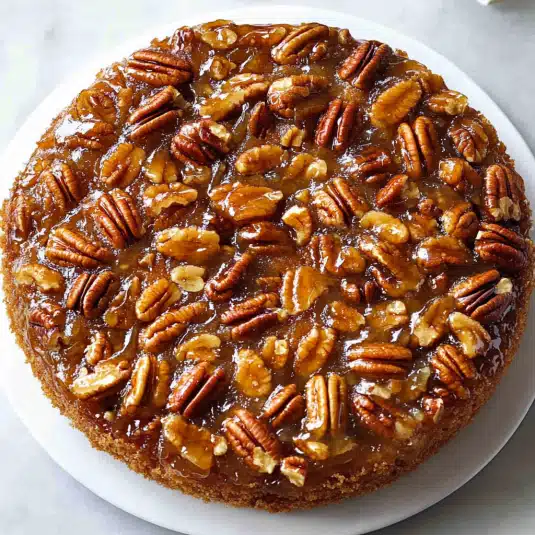
Golden, gooey, and rich with caramelized pecans, this pecan upside down cake is the kind of dessert that draws a crowd the moment it hits the table. The top shines with a sticky layer of brown sugar and pecans, while the base is a moist vanilla cake that stays tender in every bite. This guide is designed for everyone who loves a no-fail dessert, whether you’re baking from scratch or taking the quick route with a cake mix. It’s the only guide you’ll need to master this classic.
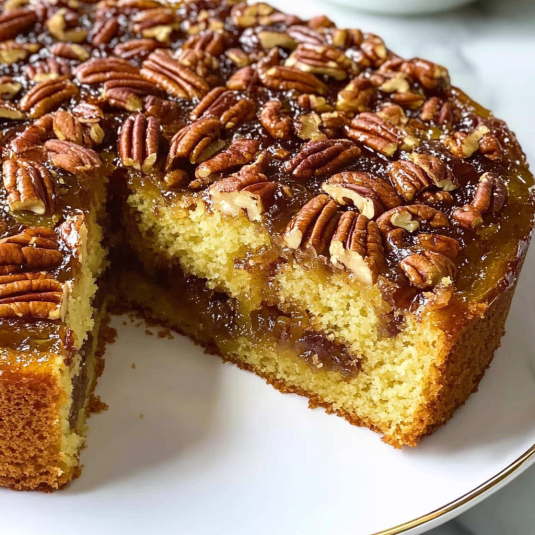
Table of Contents
Why You’ll Love This Recipe
- Amazing Flavor and Texture: This cake blends the best of both worlds. It has the deep, buttery sweetness of pecan pie combined with the soft, moist crumb of a vanilla cake. Every bite gives you the perfect mix of gooey caramel and fluffy cake.
- Visually Stunning: The glossy caramel topping and golden pecans create a show-stopping dessert that looks as good as it tastes. It’s an ideal centerpiece for holidays, family gatherings, or any special occasion.
- Foolproof Method: You’ll never have to worry about sticky pans or dry cake again. This guide includes simple baking tips and a troubleshooting section that walks you through how to fix or avoid common mistakes before they happen.
- Two Recipes in One: You get both a from-scratch version and an easy shortcut using a boxed cake mix. Whether you want the full homemade experience or a quicker option, you’ll have a version that suits your time and skill level.
Ingredient Spotlight
Sour Cream or Buttermilk: These ingredients are the secret to a soft and moist crumb. They add richness and balance the sweetness of the caramel topping. The light tang also enhances the overall flavor, making the cake taste fresh rather than heavy.
Corn Syrup or Honey: Both work to create that glossy, gooey caramel topping. They help prevent the sugar from crystallizing, keeping the texture smooth and pourable. Honey adds a warm floral note, while corn syrup gives a classic pecan pie flavor.
Brown Sugar: This gives the topping its deep caramel color and rich molasses taste. It also blends beautifully with butter and pecans to form that signature sticky layer.
Pecans: The star of the recipe. Toasty, nutty, and buttery, pecans add crunch and balance the sweetness. Chopped pecans fit perfectly into the crevices of the pan, ensuring each slice has plenty of flavor.
Vanilla Extract: A small touch that makes a big difference. Vanilla enhances the cake’s aroma and deepens the flavor of both the batter and the topping.
Each of these ingredients plays a specific role in making your cake tender, flavorful, and perfectly balanced.
Print
Pecan Upside Down Cake Recipe
- Total Time: 1 hour
- Yield: 10 slices 1x
- Diet: Vegetarian
Description
Golden, gooey, and rich with caramelized pecans, this pecan upside down cake is a show-stopping dessert that’s moist, buttery, and foolproof to make.
Ingredients
- ½ cup packed brown sugar
- 1 stick unsalted butter, cut into small pieces
- ¼ cup honey or corn syrup
- ⅛ teaspoon kosher salt
- 1¼ cups coarsely chopped raw pecans
- 1½ cups all-purpose flour
- 1½ teaspoons baking powder
- ½ teaspoon baking soda
- ¾ cup sour cream (or full-fat Greek yogurt)
- 2 large eggs
- ¾ cup granulated sugar
- ½ cup neutral oil
- ¼ cup water
- 1 teaspoon vanilla extract
- ½ teaspoon kosher salt
- ¼ cup packed brown sugar (for cinnamon layer)
- 2 teaspoons ground cinnamon
Instructions
- Preheat oven to 350°F and grease a 9-inch round cake pan generously.
- In a saucepan, combine ½ cup brown sugar, 1 stick butter, ¼ cup honey, and ⅛ tsp salt. Heat on medium-low, stirring until smooth.
- Stir in 1¼ cups chopped pecans, coat evenly, and spread into the pan.
- In a bowl, whisk 1½ cups flour, 1½ tsp baking powder, and ½ tsp baking soda.
- In another bowl, whisk ¾ cup sour cream, 2 eggs, ¾ cup sugar, ½ cup oil, ¼ cup water, 1 tsp vanilla, and ½ tsp salt until smooth.
- Add dry ingredients in two additions, stirring gently just until combined.
- Mix ¼ cup brown sugar with 2 tsp cinnamon for the filling.
- Spoon half the batter over pecans. Sprinkle with cinnamon-sugar. Add remaining batter and smooth.
- Bake for 35–40 minutes. Check doneness at 30 minutes with a toothpick. Tent with foil if browning too quickly.
- Let cool in pan for 10–15 minutes. Run knife around edges.
- Invert onto a large plate or stand. Lift pan gently. Reposition any pecans that stick.
- Sprinkle flaky salt if desired. Let cool before serving. Pair with ice cream if preferred.
Notes
Use room temperature ingredients for better mixing. Avoid overmixing. Cool for only 10 minutes before flipping for best topping release.
- Prep Time: 20 minutes
- Cook Time: 40 minutes
- Category: Dessert
- Method: Baking
- Cuisine: American
Nutrition
- Serving Size: 1 slice
- Calories: 546
- Sugar: 43.6g
- Sodium: 380.7mg
- Fat: 29.9g
- Saturated Fat: 11.3g
- Carbohydrates: 65.1g
- Fiber: 3.0g
- Protein: 8.2g
Essential Tools
Bundt Pan: A standard round bundt pan works best for this recipe. Its deep grooves hold the caramel and pecans beautifully, creating that classic upside down design. Make sure to grease every curve generously so the cake releases easily after baking.
Mixing Bowls: You will need two bowls, one for the dry ingredients and one for the wet mixture. This helps keep the batter smooth and prevents overmixing.
Whisk and Spatula: A whisk blends the ingredients evenly, while a spatula is perfect for folding the batter and scraping the bowl clean.
Small Saucepan: This is used to prepare the caramel pecan topping. Choose one with a heavy bottom to prevent the sugar from burning.
Measuring Cups and Spoons: Accurate measurements are key for the perfect texture. Even small changes in sugar or flour can affect the final result.
Cooling Rack: After baking, place the cake pan on a rack to cool slightly before inverting. This allows steam to escape and keeps the cake from becoming soggy.
Serving Plate: Choose a large, flat plate or cake stand to flip the cake onto. The extra space helps catch any caramel that might drip when you invert it.
Having these tools ready before you start will make the baking process smoother and more enjoyable.
Step-by-Step Instructions
Make the pecan topping
- Preheat the oven to 350°F. Prepare a 9-inch round cake pan that is about 2 inches deep. Grease it well with butter or cooking spray to prevent sticking.
- In a small saucepan, combine ½ cup of packed brown sugar, 1 stick of unsalted butter cut into small pieces, ¼ cup of honey, and ⅛ teaspoon of kosher salt. Cook over medium-low heat while stirring often. The goal is to melt the butter and dissolve the sugar without boiling. The mixture should look smooth and glossy.
- Stir in 1¼ cups of coarsely chopped raw pecans. Mix until every piece is coated with the warm caramel. Pour this mixture into the prepared pan and spread it evenly across the bottom. This will form the sticky topping once the cake is flipped.
Make the cake batter
- In a medium bowl, whisk together 1½ cups of all-purpose flour, 1½ teaspoons of baking powder, and ½ teaspoon of baking soda. Set aside.
- In a large bowl, whisk ¾ cup of sour cream (or full-fat Greek yogurt) with 2 large eggs, ¾ cup of granulated sugar, ½ cup of neutral oil, ¼ cup of water, 1 teaspoon of vanilla extract, and ½ teaspoon of kosher salt. Mix until smooth and creamy.
- Add the dry ingredients to the wet mixture in two parts. Stir gently until combined each time. Stop mixing once the batter looks smooth. Overmixing will make the cake dense instead of light.
- In a small bowl, mix ¼ cup of packed brown sugar with 2 teaspoons of ground cinnamon. This will create a sweet layer in the middle of the cake.
- Spoon half of the batter into the pan on top of the pecan layer. Spread it gently into an even layer without disturbing the nuts. Sprinkle the cinnamon-sugar mixture evenly over the batter. Add the remaining batter on top and spread it carefully until smooth.
- Place the pan in the oven and bake for 35 to 40 minutes. Check after 30 minutes by inserting a toothpick into the center. If it comes out clean, the cake is ready. If the top is browning too quickly, loosely cover it with foil and finish baking.
- Once baked, let the cake rest in the pan for 10 to 15 minutes. This short cooling time helps the topping set slightly while still warm enough to release. Run a thin knife around the edges to loosen it.
- Place a large plate or cake stand over the pan. Hold both firmly and flip them together in one smooth motion. Lift the pan slowly to reveal the caramel pecan layer. If a few nuts stay behind, scoop them out and press them gently back onto the cake.
- Sprinkle with flaky salt for a light contrast if you like. Let it cool until warm or room temperature. Serve with a scoop of vanilla ice cream for an extra treat.
This method gives you a cake that’s rich, moist, and topped with a golden layer of caramelized pecans that stays soft and glossy.
Expert Tips for a Perfect Cake
Grease the Pan Generously: Use butter or cooking spray to cover every ridge of the bundt pan. Pay special attention to the grooves where caramel tends to stick. A well-greased pan guarantees a clean release and a flawless pecan topping.
Do Not Overmix the Batter: Stir the ingredients just until they are combined. Overmixing builds too much gluten, which can make the cake tough and dry instead of tender and moist.
Use Chopped Pecans: Chopped pieces settle better into the base of the pan and create an even layer. Whole pecans often float or overlap, leaving gaps in the topping.
Spoon the Batter, Don’t Pour It: Gently spoon or scoop the batter into the pan to avoid moving the caramel and nuts. Pouring directly from the bowl can disturb the topping and cause uneven baking.
Cool for Only 5 to 10 Minutes: Letting the cake cool too long in the pan can cause the caramel to harden, making it difficult to release. Flipping it while it is still warm keeps the topping glossy and smooth.
Use Room Temperature Ingredients: Ingredients that are all the same temperature mix more easily, giving you a uniform batter. This helps the cake rise evenly and stay soft.
Tent the Cake if Needed: If the top starts browning before the center is done, lightly cover it with foil during the last part of baking. This keeps the color even and prevents the edges from drying out.
Following these small details makes a big difference. Each one helps you achieve a perfectly baked pecan upside down cake with a soft crumb and a glossy caramel finish.
Troubleshooting Guide
Problem: My caramel topping is hard like brittle
The sugar likely cooked too long or at a high temperature. The caramel should only be heated until the butter melts and the sugar dissolves. It should look smooth and pour easily. If it becomes thick or grainy, remove it from the heat immediately. When poured correctly, the topping stays soft and gooey after baking.
Problem: My cake stuck to the pan
This usually happens when the pan is not greased well or the cake was left to cool too long. Always coat the pan with butter or spray, making sure every curve is covered. Let the cake rest for only ten minutes before flipping. If a few pecans stick to the pan, gently remove them and press them back onto the warm cake. The heat helps them stick naturally.
Problem: My cake is dry
A dry cake can result from overmixing or using too much flour. Mix the batter just until smooth and measure ingredients carefully. Using a kitchen scale helps maintain accuracy. Another reason could be overbaking. Check the cake with a toothpick at the 30-minute mark and remove it from the oven as soon as it comes out clean.
Problem: My topping separated or soaked into the cake
This happens when the caramel was too thin or the batter was added while it was still very hot. Let the caramel cool for a few minutes before spooning in the batter. A slightly thick, glossy texture helps the topping stay in place during baking.
Problem: My cake broke apart while flipping
This means the cake was either flipped too soon or not loosened around the edges. Always run a thin knife along the sides before inverting. Hold the plate firmly and flip in one smooth motion. If it cracks slightly, do not worry. The warm caramel can be spread over the top to hide any imperfections.
This troubleshooting section covers the most common mistakes and gives you clear ways to fix or prevent them. With these tips, every bake can come out soft, glossy, and picture-perfect.
Ingredient Substitutions and Variations
For Pecans: If you run out of pecans or want a slightly different flavor, use walnuts. They have a mild, buttery taste that works beautifully with caramel and still give a nice crunch.
For Sour Cream: Plain full-fat Greek yogurt makes an excellent substitute. It provides the same moisture and tang that keep the cake soft and tender. Use it in equal amounts.
For Buttermilk: You can make a quick homemade version using milk and lemon juice. Combine one cup of milk with one tablespoon of lemon juice or white vinegar. Let it sit for five minutes until slightly thickened before using.
Flavor Variations:
- Add a pinch of nutmeg or allspice to the cinnamon-sugar layer for a warmer, spiced flavor.
- Replace honey with maple syrup to give the caramel topping a richer, deeper taste.
- Stir a handful of mini chocolate chips into the batter for a sweet twist that pairs perfectly with the pecans.
For an Easy Shortcut Version: Use a yellow or butter cake mix instead of making the batter from scratch. Follow the directions on the box for eggs and oil, then pour it over the prepared pecan topping. The results are just as delicious and save time when you need a quick dessert.
These swaps and variations let you personalize the cake while keeping its signature balance of soft crumb and gooey caramel topping.
Storage, Freezing, and Thawing Instructions
Room Temperature Storage:
Once the cake has completely cooled, place it in an airtight container or cover it tightly with plastic wrap. It can be stored at room temperature for up to three days. This keeps the caramel soft and the cake moist without drying out.
Refrigerator Storage:
If you need to keep it longer, store the cake in the refrigerator for up to five days. Before serving, let it sit at room temperature for about thirty minutes or warm individual slices in the microwave for fifteen to twenty seconds to bring back the softness and shine of the caramel topping.
Freezing Instructions:
To freeze, cut the cake into individual slices and wrap each piece tightly in plastic wrap. Place the wrapped slices in a freezer-safe bag or container. This helps prevent freezer burn and keeps the flavor fresh. The cake can be frozen for up to three months.
Thawing Instructions:
When ready to enjoy, move the frozen slices to the refrigerator and let them thaw overnight. For quicker results, leave them at room temperature for about one hour. Warm slightly before serving if desired.
Tip for Best Quality:
Avoid freezing the entire cake in one piece, as the caramel topping can become sticky or lose its texture when thawed. Storing smaller portions keeps the layers intact and maintains the perfect balance between the soft cake and the gooey pecan topping.
Conclusion and Engagement
This pecan upside down cake brings together everything people love about homemade desserts. The caramel topping is rich and buttery, the cake stays soft and moist, and every slice delivers the perfect mix of sweetness and crunch. Whether you bake it from scratch or use the easy cake mix version, the result always feels special and comforting.
If you try this recipe, share your experience in the comments below. Let others know what worked best for you or any creative twists you added. Your feedback helps other bakers get better results too.
I’d love to see how your cake turns out. Snap a photo and tag me on social media so others can see your creation. Whether it’s for a holiday, a family gathering, or a weekend treat, this cake is one you’ll want to bake again and again.
Fore more recipes follow me in Facebook, medium and Pinterest
FAQs
Do you wait for an upside-down cake to cool before flipping
No, you should not let it cool completely. Wait for about ten minutes after removing the cake from the oven. This short resting time allows the caramel layer to set slightly while staying soft enough to release from the pan. If you wait too long, the caramel will harden, and the topping may stick.
What kind of pan is best for upside-down cake
A standard round bundt pan or a deep nine-inch round cake pan is ideal. The bundt pan gives the cake a beautiful shape and helps the caramel spread evenly. Avoid springform pans because the caramel can leak through the seams during baking.
How do I prevent a soggy cake bottom
Make sure to measure the wet ingredients correctly and avoid overmixing the batter. Overmixing can cause the cake to become dense and absorb too much of the caramel. Also, let the cake rest for only ten minutes before flipping so the topping sets without soaking into the crumb.
What are common upside-down cake mistakes
Undergreasing the pan, overcooking the caramel, and leaving the cake to cool too long are the most frequent issues. Each of these can cause sticking or texture problems. Grease the pan thoroughly, cook the caramel only until smooth, and flip the cake while it is still warm.
What is the secret to a moist upside-down cake
Using sour cream or buttermilk makes the cake extra soft and rich. Measuring flour accurately and not overmixing are also key. The balance of moisture and fat ensures a tender crumb that stays delicious even the next day.
How long do you cook an upside-down cake for
The baking time usually ranges from thirty-five to forty minutes at 350°F. Check for doneness by inserting a toothpick into the center of the cake. If it comes out clean or with just a few crumbs, the cake is ready. Baking too long can dry it out, so watch closely toward the end.