Fresh rosemary brings a clean, fragrant taste that makes these cookies stand out from classic shortbread. I learned to appreciate this flavor combination while testing small batch recipes in my own kitchen, and it quickly became a favorite because the scent alone feels warm and inviting. The soft crumb comes from using confectioners’ sugar, which melts into the butter and gives the cookies a delicate texture that feels rich without being heavy.

This slice and bake method keeps the process simple. You mix the dough, roll it into logs, chill it, then cut neat rounds whenever you want warm cookies. It is easy to handle and perfect for both everyday baking and gifting.
Table of Contents
The Secret to a Perfect, Melt in Your Mouth Crumb
Why Confectioners’ Sugar Is Key
Confectioners’ sugar blends into the butter with almost no grainy feel. Its fine texture helps the dough hold together while keeping the baked cookies soft and tender. Granulated sugar makes shortbread slightly crisp, but confectioners’ sugar gives the crumb that soft melt that people love.
The Quality of Butter Matters
Butter carries most of the flavor in shortbread, so the richer the butter, the better the result. A high fat, European style butter gives a deeper taste, smoother texture, and cleaner finish. Using this type of butter can noticeably improve both flavor and mouthfeel.
Should I Add Rice Flour or Cornstarch
Some bakers add a spoonful of rice flour or cornstarch to create an even softer crumb. Rice flour makes the texture lighter, while cornstarch adds a gentle tenderness. These additions are optional, but both can contribute to a more delicate cookie if you like an extra soft bite.
Essential Ingredients You Will Need
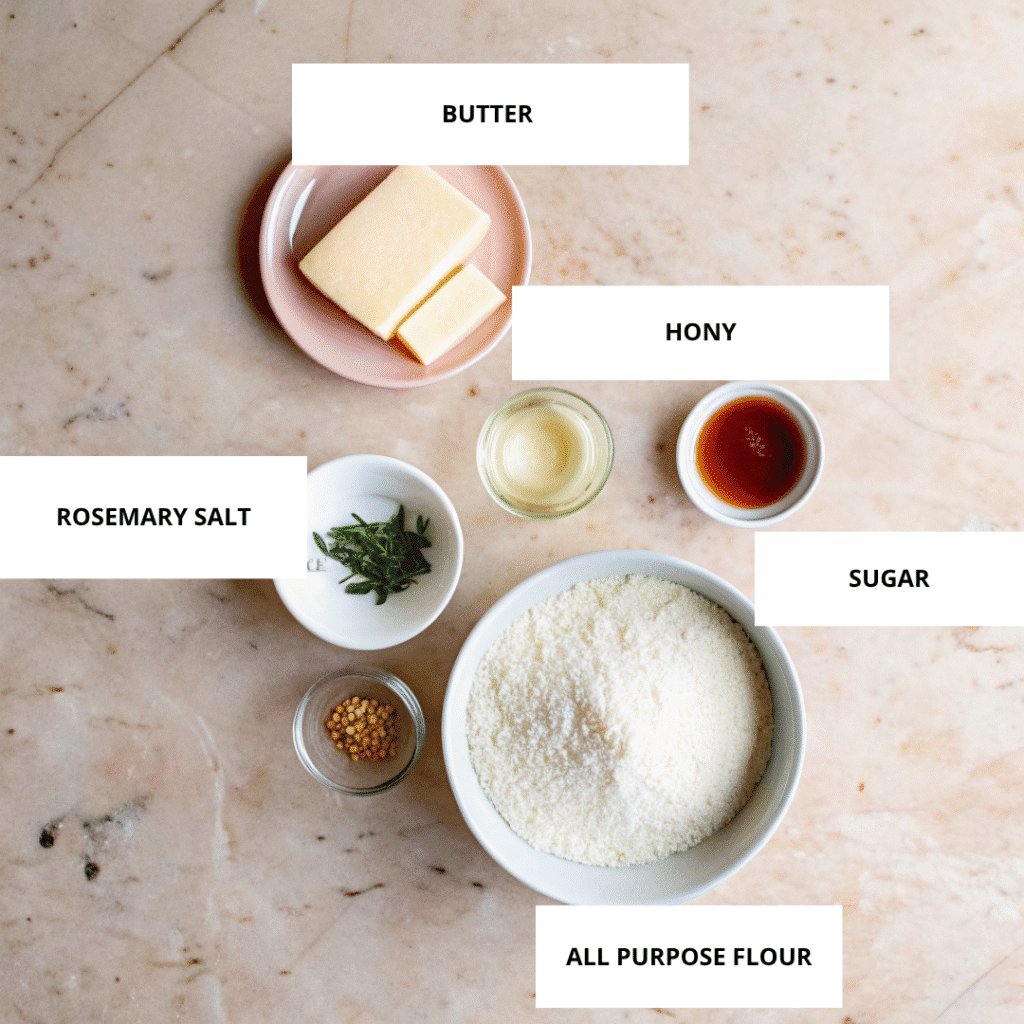
• Butter, softened
Soft butter blends smoothly and helps create a light texture. Let it sit at room temperature until it gives slightly when pressed.
• Confectioners’ sugar
This sugar dissolves quickly and gives the cookies a soft, melt in your mouth feel.
• Fresh rosemary
Always choose fresh rosemary. It softens during baking and adds a clean, bright aroma. Dried rosemary stays tough and does not release the same flavor.
• All purpose flour
This forms the structure of the cookies. A gluten free blend can work if needed, as long as it is labeled cup for cup.
• Sea salt
A small pinch balances the sweetness and highlights the buttery base.
Step by Step Instructions (The Slice and Bake Method)
Recipe Card Schema will be placed here once the full article is assembled.
- Start the dough by creaming the butter and sugar
Place the softened butter in a mixing bowl and add the confectioners’ sugar. Beat on medium speed for five to seven minutes until the mixture looks pale and fluffy. This step traps small air pockets that help the cookies stay light. - Combine the dry ingredients
In a separate bowl, stir the flour, chopped fresh rosemary, and sea salt. Add this mixture to the creamed butter. Mix on low speed until everything comes together in a smooth dough. - Shape and chill the dough for best results
Divide the dough in half. Shape each portion into a tight log that is about two inches thick. Wrap each log in plastic wrap and place it in the refrigerator. Chill overnight for the cleanest slices and the most even baking. - Slice and bake
Preheat your oven to 350°F. Line a baking sheet with parchment. Unwrap the chilled dough and cut it into slices that are about one quarter inch thick. Place the slices on the baking sheet with a little space between them. Bake for eleven to thirteen minutes until the edges turn light golden.

Rosemary Shortbread Cookies
- Total Time: 24 hours
- Yield: 20 to 24 cookies
- Diet: Vegetarian
Description
Soft, buttery rosemary shortbread cookies with a light crumb and gentle herbal flavor. Easy slice and bake dough that chills overnight for clean cuts and perfect texture.
Ingredients
- Butter (softened)
- Confectioners’ sugar
- Fresh rosemary (finely chopped)
- All purpose flour
- Sea salt
Instructions
- Cream the softened butter with confectioners’ sugar for 5–7 minutes until pale and fluffy.
- Mix the flour, chopped rosemary, and sea salt in a separate bowl.
- Add the dry mixture to the creamed butter and mix until the dough forms.
- Shape the dough into a log, wrap tightly, and chill overnight.
- Preheat oven to 350°F.
- Slice the chilled dough into 1/4-inch pieces and place on a parchment-lined baking sheet.
- Bake for 11–13 minutes, until the edges are lightly golden.
Notes
Chilling the dough overnight ensures clean slices and prevents spreading during baking.
- Prep Time: 10 minutes
- Cook Time: 13 minutes
- Category: Dessert
- Method: Slice and bake
- Cuisine: American
Nutrition
- Serving Size: 1 cookie
- Calories: 259 kcal
- Sugar: 12 g
- Sodium: 122 mg
- Fat: 15 g
- Saturated Fat: 10 g
- Unsaturated Fat: 5 g
- Trans Fat: 1 g
- Carbohydrates: 28 g
- Fiber: 1 g
- Protein: 2 g
- Cholesterol: 40 mg
Frequently Asked Questions
What is the best sugar for shortbread
Confectioners’ sugar gives the softest texture. Its fine texture blends quickly into the butter and keeps the cookies tender. Granulated sugar creates a firmer bite, so the choice depends on how soft you want the crumb. Most bakers prefer confectioners’ sugar for a melt in your mouth finish.
What makes shortbread so crumbly
Shortbread has a high butter content and no egg, which keeps the texture delicate. When the butter melts in the oven, it leaves tiny spaces that create the crumbly feel. Handling the dough gently also helps keep the texture light.
What happens if you do not chill shortbread before baking
Warm dough spreads too fast and loses its shape. Chilling keeps the butter firm so the cookies hold their round edges. It also improves texture by helping the dough relax before it goes into the oven.
What are some common shortbread mistakes
Overmixing makes the dough tough. Adding too much flour makes the cookies dry. Baking too long causes the edges to darken and the centers to harden. Using dried rosemary instead of fresh also weakens the flavor and leaves stiff bits in the cookies.
Do shortbread cookies harden as they cool
Yes, shortbread firms up as it cools. The texture may seem soft when the cookies come out of the oven, but they settle as the butter solidifies. Let them rest on the baking sheet for a few minutes before moving them.
How long can you keep homemade shortbread cookies
Stored in an airtight container, they stay fresh for about five days. Keep them in a cool place away from sunlight so the butter does not soften too much.
Flavor and Shaping Variations
Rosemary Citrus Shortbread
Add a teaspoon of lemon zest, orange zest, or grapefruit zest to the dough. The bright aroma blends well with the rosemary and gives the cookies a light, clean taste. You can use one citrus or mix a few for a stronger flavor.
Salted Rosemary Shortbread
Before baking, sprinkle a small pinch of flaky sea salt on top of each slice. This creates a sweet and savory balance that highlights the butter and rosemary.
Shaping into Shortbread Bars or Fingers
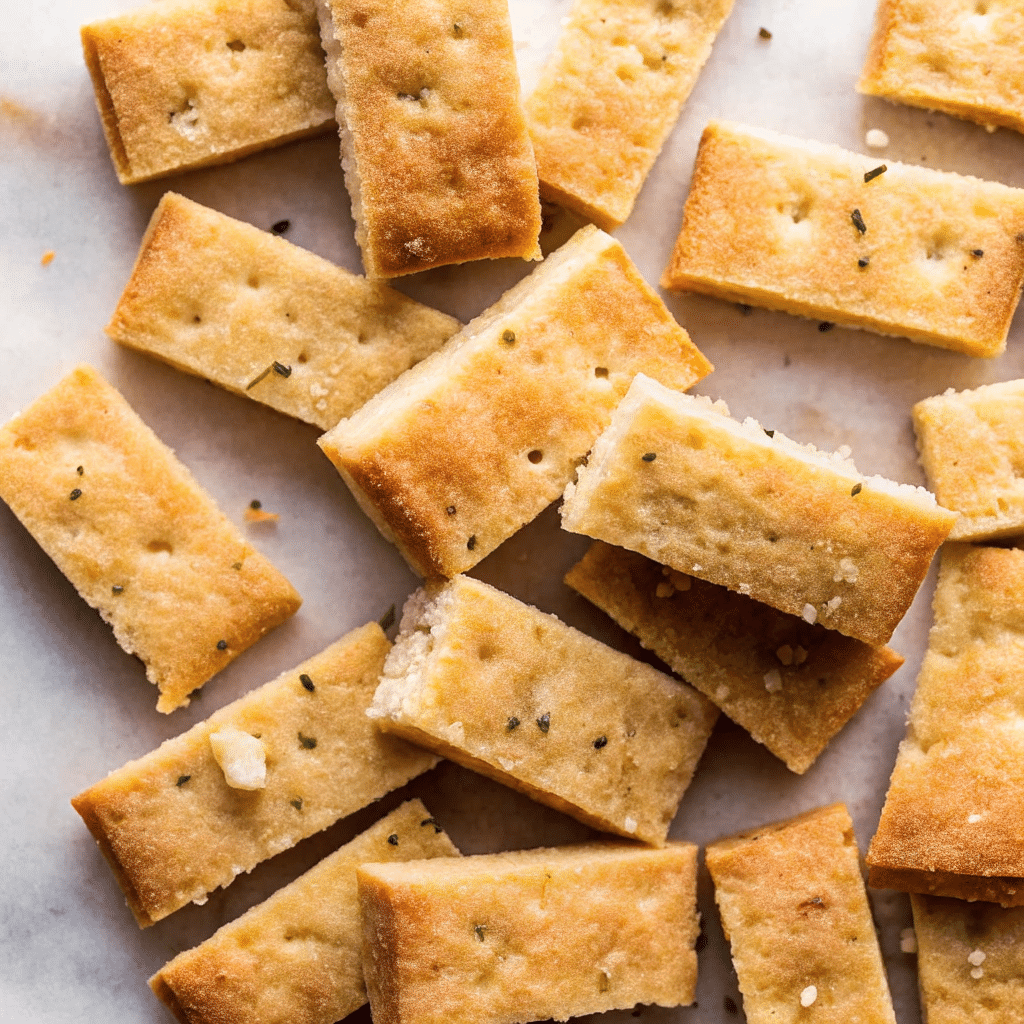
If you prefer bars instead of round cookies, press the dough into a square pan lined with parchment. Smooth the top, chill it, then cut the dough into sticks. Bake until the edges turn light golden.
Adding Crunch
For extra texture, roll the dough logs in sanding sugar or slivered almonds before chilling. This gives the edges a crisp finish and a pleasant contrast to the soft center.
Beyond Dessert: Savory Pairings for Rosemary Shortbread
Rosemary shortbread has a gentle herbal taste that works surprisingly well with savory items. The buttery base gives it a smooth finish, which makes it a good match for creamy or sharp flavors.
Pair the cookies with soft goat cheese for a mild tang that blends well with the rosemary. Aged cheddar also works nicely because its deeper flavor contrasts with the sweet crumb. If you prefer something lighter, serve the cookies with a crisp white wine such as Sauvignon Blanc. The bright acidity balances the richness of the butter and brings out the herbal notes in each bite.
Storage, Freezing, and Elegant Gifting
How to Store Rosemary Shortbread
Keep the cooled cookies in an airtight container at room temperature. They stay fresh for up to five days. Place a small sheet of parchment between layers to protect their shape and keep the edges from rubbing together.
Can You Freeze the Dough or Baked Cookies
Yes, both the dough and the baked cookies freeze well.
For dough logs, wrap each log tightly in plastic, then place it in a freezer bag. Freeze for up to two months. When ready to bake, let the log rest in the refrigerator until firm enough to slice.
For baked cookies, place them in a freezer safe container with parchment between layers. Freeze for up to two months. Thaw at room temperature until the texture softens.
Gifting and Presentation Ideas
These cookies make a thoughtful gift because they look elegant and smell amazing. Place a small stack in a clear cellophane bag, tie it with a ribbon, and tuck a fresh rosemary sprig inside for a simple touch. You can also arrange the cookies in a tin with parchment paper for a clean and classic look.
Fore more recipes follow me in Facebook, medium and Pinterest