
This stuffed French toast works because of one smart choice. It uses the pocket method, not the sandwich style seen in recipes from brands like McCormick. Cutting a slit into one thick slice keeps the filling inside and stops leaks while cooking.

The second reason is bread choice. Bread that is one to three days old soaks up the custard without falling apart. That simple step gives you a soft center and a crisp outside every time.
Table of Contents
Selecting the Right Bread (The Foundation)
Bread choice decides how stuffed French toast turns out. The goal is a slice that holds its shape, absorbs custard well, and leaves room for a deep filling pocket.
Challah is the best option. It has a soft crumb with enough structure to stay intact after soaking. It absorbs custard evenly and cooks into a tender center with a crisp surface.
Brioche works well if you want a richer bite. Its butter content adds flavor, but it is softer than challah. Use bread that is slightly stale so it does not collapse in the pan.
Sourdough suits those who like contrast. Its firm texture and light tang balance sweet fillings like cream cheese or fruit spreads.
Pro Tip: Slice the bread at least 1.25 to 2 inches thick. Thick slices make it easier to cut a clean pocket and keep the filling inside while cooking.
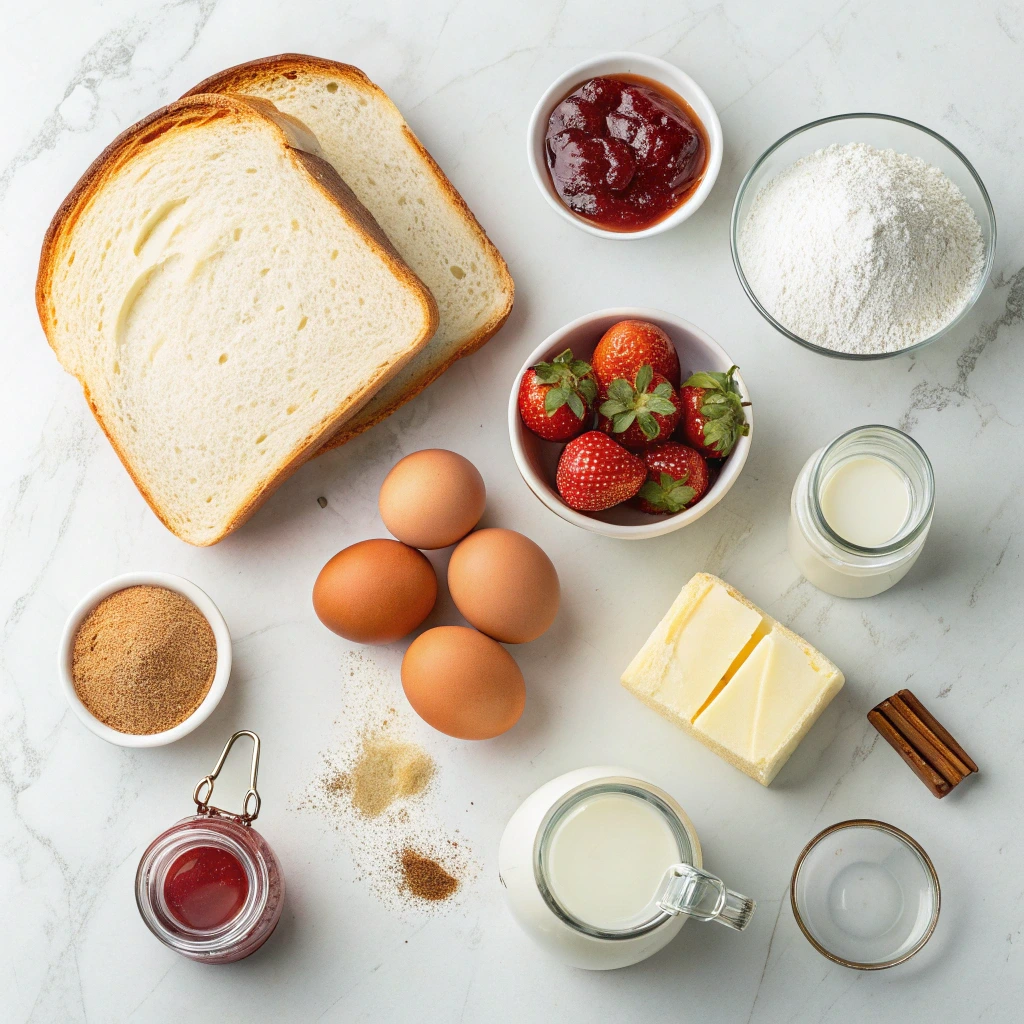
Bread Comparison for Stuffed French Toast
| Bread Type | Custard Absorption | Final Texture |
|---|---|---|
| Brioche | Absorbs fast due to high butter content | Very soft and rich, can turn delicate |
| Challah | Absorbs evenly without breaking | Soft inside with good structure |
| Sourdough | Absorbs slowly because of firm crumb | Crisp outside with a chewy bite |
The Perfect Pocket Technique Step by Step
This technique keeps the filling inside the bread where it belongs. Follow these steps for clean results every time.
1-Place one thick slice of bread flat on a cutting board. Keep it steady with your non-cutting hand.
2-Use a small paring knife. Insert the tip into the top edge of the bread, about halfway down.
3-Gently move the knife left and right to form a pocket. Stop before reaching the sides or bottom.
4-Check the inside with your finger to confirm there is space for filling without tearing the bread.
5-Spoon the filling in slowly. Do not overfill, or the pocket may split while cooking.
Print
Stuffed French Toast
- Total Time: 20 minutes
- Yield: 1 serving 1x
- Diet: Vegetarian
Description
Golden stuffed French toast made with thick bread, a sealed pocket of cream cheese and strawberries, and a crisp exterior with a soft, custardy center—perfect for brunch or make-ahead mornings.
Ingredients
- 1 thick slice challah, brioche, or sourdough bread (1–3 days old)
- 2 tablespoons cream cheese, softened
- 1 tablespoon strawberry preserves
- 3 large eggs
- 1 cup half and half or whole milk
- 1 teaspoon vanilla extract
- 1/2 teaspoon ground cinnamon
- Pinch of nutmeg
- 1 tablespoon all purpose flour
- Small pinch of salt
- Butter for cooking
Instructions
- Cut a deep pocket into one thick slice of bread using a small paring knife, stopping before the edges.
- Mix cream cheese and strawberry preserves, then spoon the filling gently into the pocket without overfilling.
- Whisk eggs until smooth, then add milk, vanilla, cinnamon, nutmeg, flour, and salt until fully combined.
- Dip the stuffed bread into the custard for a few seconds per side until damp but not heavy.
- Heat a nonstick skillet over medium low heat and add a thin layer of butter.
- Cook the stuffed French toast slowly until golden brown, then flip carefully and cook the other side.
- Transfer to a wire rack briefly before serving to keep the exterior crisp.
Notes
Use thick, slightly stale bread and avoid overfilling the pocket. Cook over medium low heat and rest on a wire rack to prevent soggy results.
- Prep Time: 10 minutes
- Cook Time: 10 minutes
- Category: Breakfast / Brunch
- Method: Pan-Fried / Skillet
- Cuisine: American
Nutrition
- Serving Size: 1 serving
- Calories: 210
- Sugar: 19g
- Sodium: 120mg
- Fat: 13g
- Saturated Fat: 8g
- Unsaturated Fat: 4g
- Trans Fat: 0g
- Carbohydrates: 22g
- Fiber: 1g
- Protein: 3g
- Cholesterol: 38mg
Filling Variations and Flavor Balancing
The filling sets the tone for stuffed French toast. A good mix adds flavor without turning each bite cloyingly sweet.
The Classic uses sweetened cream cheese and strawberry preserves. The cream cheese brings richness, while the fruit adds light acidity that keeps the flavor clean.
The Indulgent pairs Nutella with sliced bananas. This option is rich and smooth, so keep the filling modest. Too much can overpower the bread and custard.
The Savory Edge comes from mascarpone or peanut butter. Mascarpone gives a mild, creamy bite. Peanut butter adds depth and works well with a touch of fruit or honey.
To avoid cloyingly sweet results, add a small pinch of salt to the filling. A bit of lemon zest also helps cut the sugar and keeps the flavors balanced.
The Custard Secret for a Restaurant Crust
The custard controls texture. A weak mix leads to soft bread with no structure. A balanced custard creates a crisp outside with a soft center.
The key is a small amount of all purpose flour. This trick helps the outside cook into a golden crust while the inside stays tender.
Custard Ingredients
- 3 large eggs
- 1 cup half and half or whole milk
- 1 teaspoon vanilla extract
- 1 half teaspoon ground cinnamon
- Pinch of nutmeg
- 1 tablespoon all purpose flour
- Small pinch of salt
Whisk the eggs first until smooth. Add the milk, vanilla, spices, flour, and salt. Whisk again until the mixture looks even with no dry spots.
Dietary Alternatives Section
This recipe can be adjusted for lighter or plant based preferences without changing the overall result. Almond milk works well in the custard and keeps the texture soft with a mild flavor. Use unsweetened almond milk so the toast does not taste too sweet.
For cooking, plant based butter is a good swap for regular butter. Heat the pan gently and add a thin layer so the toast browns evenly. These small changes suit readers looking for healthier or dairy free options while keeping the same cooking steps.
Cooking and Troubleshooting The Anti Soggy Guide
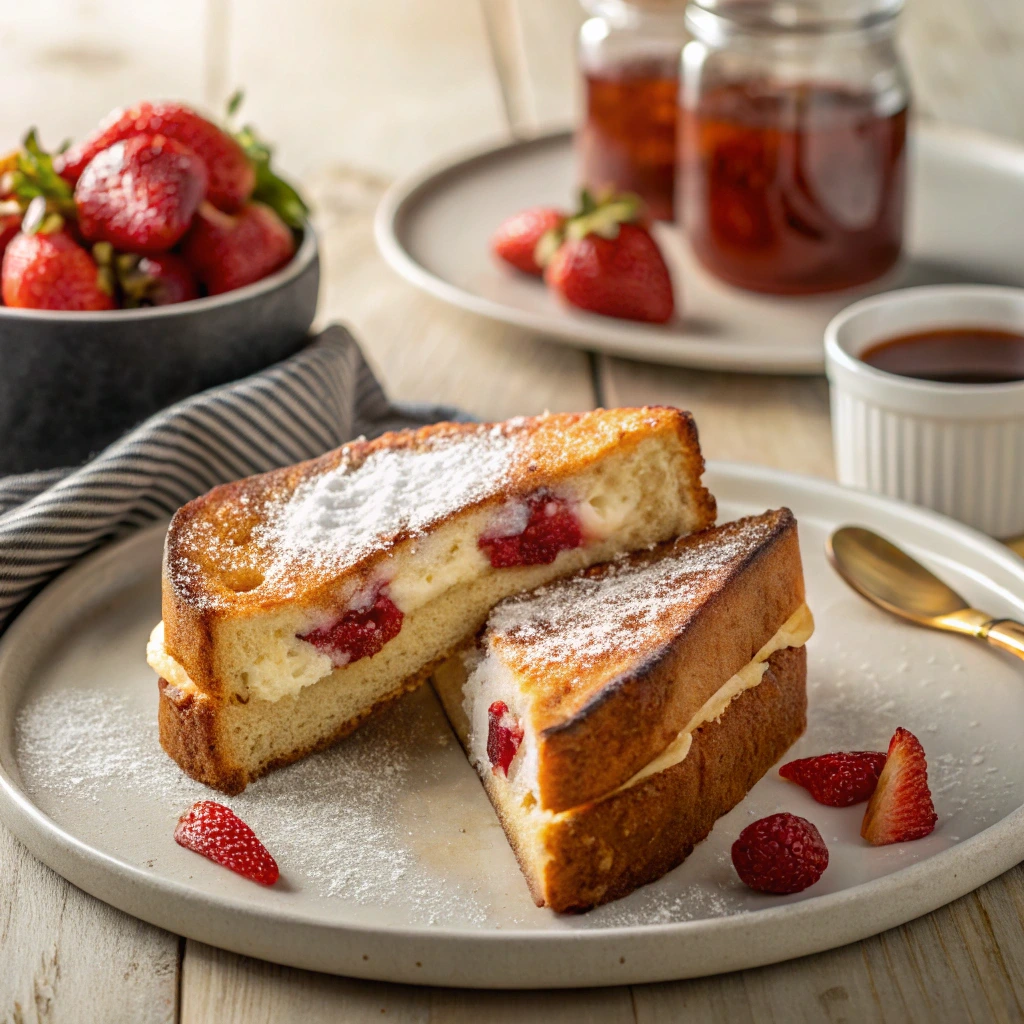
This step decides texture. Small timing and heat choices make the difference between crisp toast and soggy bread.
The Soak
Dip the stuffed bread into the custard for just a few seconds per side. Very thick or very dry bread can sit longer, up to two or three minutes. The bread should feel damp but not heavy.
The Pan
Use a nonstick griddle or skillet set to medium low heat. High heat browns the outside too fast and leaves the center cold. Add a light coat of butter before cooking.
Cook each side slowly until golden brown. Flip with care so the pocket stays sealed.
The Wire Rack
Once cooked, move the toast to a wire rack. Do not place it on a plate. Steam builds under the bread and softens the bottom. Air flow keeps the outside crisp while the inside stays soft.
Soaking Science Explained
Soaking time depends on bread thickness and dryness. Thin or standard slices need only a few seconds per side. This keeps the bread from absorbing too much liquid.
For very thick bread, especially slices cut 1.5 to 2 inches thick and a few days old, a longer soak works better. Let the bread sit in the custard for up to 3 minutes per side. This allows the center to soften without breaking the outer structure.
The key is control. The bread should feel damp and flexible, not heavy or dripping. If it sinks fast or feels fragile, the soak has gone too long.
Make Ahead and Reheating Instructions
Stuffed French toast works well for prep in advance, which helps during busy mornings or holidays.
Make Ahead
You can mix the custard up to 24 hours in advance. Store it covered in the fridge and whisk again before use.
You can also cut the bread pockets ahead of time. Keep the slices wrapped so they do not dry out too much.
Cooking the toast fresh gives the best texture, but leftovers still reheat well when done right.
Reheating Methods Table
| Method | How to Reheat | Best For |
|---|---|---|
| Toaster | Reheat on a low setting, flip once if needed | Lightly filled slices |
| Oven | Heat at 300°F until warmed through | Reheating several pieces |
| Microwave | Heat in short bursts, checking often | Fast reheating only |
| Air Fryer | Heat at 320°F for 3 to 5 minutes | Restoring crisp texture |
For the oven method, place the toast on a wire rack set over a baking sheet. This keeps heat moving around the bread and helps the outside stay crisp.
Serve warm with maple syrup if you like extra sweetness
Fore more recipes follow me in Facebook, medium and Pinterest
Pro Secrets for Perfect Stuffed French Toast
What bread is best for French toast?
Challah works best because it absorbs custard well and keeps its shape. Brioche gives a richer taste. Sourdough adds a light tang that balances sweet fillings.
What is the trick to not soggy French toast?
Use bread that is one to three days old. Soak it briefly and cook over medium low heat. Let the toast rest on a wire rack after cooking so steam does not soften the bottom.
How long should you soak French toast before cooking?
Most slices need only a few seconds per side. Very thick or dry bread can soak for up to two or three minutes.
Can I use cream cheese for French toast?
Yes. Sweetened cream cheese is a classic filling. Add a pinch of salt or a bit of lemon zest so the flavor stays balanced.
How do you reheat stuffed French toast?
The oven works best. Heat at 300°F until warm through. A toaster suits lightly filled slices. The microwave is fastest but may soften the texture.
What are common stuffed French toast mistakes?
Using fresh bread, overfilling the pocket, soaking too long, and cooking on high heat are the most common issues. Each one leads to broken bread or a soggy result.