I have baked almond cookies for years. I tested them for family holidays, quiet weekends, and last minute gifts. Some batches spread too much. Others tasted dry. Over time, I learned what truly works. The right fat temperature. The right almond base. The right balance of flavor. This guide is built from those lessons, not guesses.
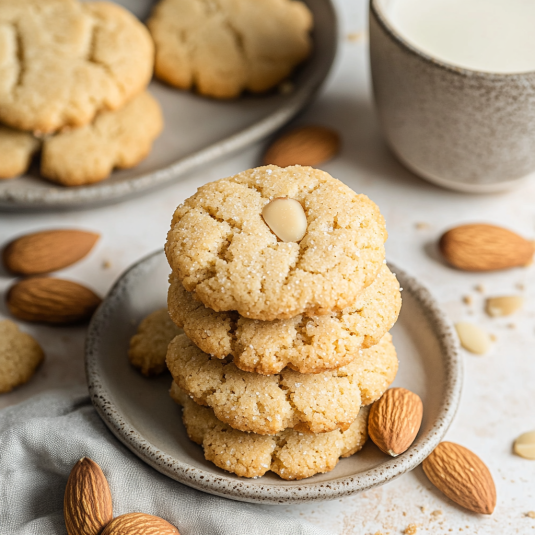
This is not just one recipe. This is a complete almond cookie guide you can trust. You will get a master almond cookie recipe that delivers soft centers and rich almond flavor. You will also find clear variations for different diets, cultural styles, and common problems. If you want almond cookies that turn out right every time, this guide shows you how.
Table of Contents
The Classic Almond Cookie Recipe (Master Recipe)
This is the core almond cookie recipe I rely on. It creates cookies with a soft center, light edges, and a clear almond taste. The method is simple, but each step matters. Small details make the difference between average cookies and great ones.
Ingredients
The Dry Base (For Structure & Flavor)
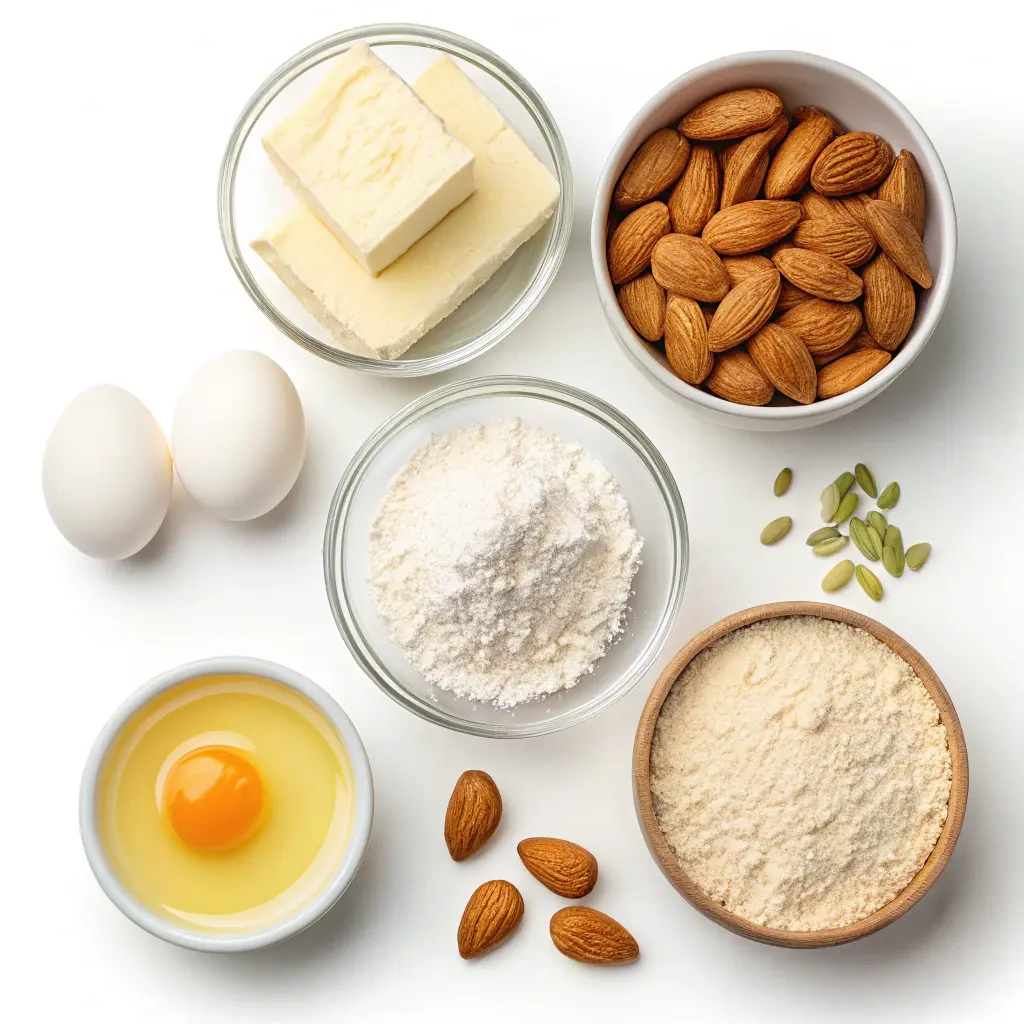
- Blanched Almond Flour: 225g (approx. 2 cups) – Provides the rich, nutty base and moisture.
- All-Purpose Flour: 65g (approx. ½ cup) – Your “Secret Ingredient” to prevent the cookies from flattening.
- Confectioners’ Sugar (Powdered Sugar): 120g (approx. 1 cup) – Creates a finer, chewier texture than granulated sugar.
- Baking Powder: 2g (approx. ½ teaspoon) – Gives a slight lift for a softer bite.
- Salt: 1g (a pinch) – To balance the sweetness and enhance the almond profile.
2. The Wet Ingredients (The Binding Force)
- Unsalted Butter: 115g (1 stick / ½ cup) – Softened but still cool to the touch (approx. 18°C/65°F).
- Large Egg + 1 Egg Yolk: (Approx. 70g total) – The extra yolk adds richness and prevents dryness.
- Pure Almond Extract: 5ml (1 teaspoon) – Essential for that deep, professional bakery aroma.
- Fresh Lemon Zest: 2g (approx. 1 teaspoon) – The “Italian Secret” to brighten the heavy nut flavors.
3. Optional For Topping (The Professional Look)
- Sliced Almonds: 30g – For a beautiful crunch on top.
- Extra Powdered Sugar: For dusting before or after baking.
Why This Recipe Is Perfect
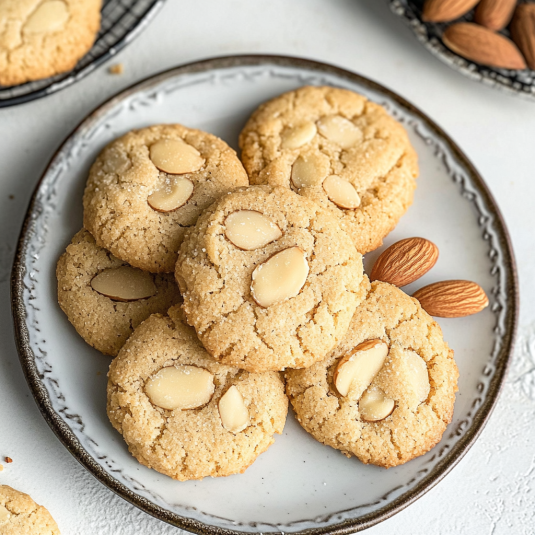
These almond cookies have a soft bite and a rich, buttery feel. They hold their shape without turning dry. The almond flavor stands out without tasting sharp. The blend of almond flour and regular flour gives balance, so the cookies do not crumble or spread too much.
These almond cookies bake with crispy edges and soft, tender centers, creating the contrast that makes them feel bakery-quality rather than dry or crumbly.
Step by Step Instructions
- Prepare the butter and sugar
Place the butter in a mixing bowl. It should feel soft when pressed but still cool. Add the sugar and mix until light and smooth. Do not rush this step. - Add the egg and flavor
Mix in the egg until fully blended. Add the almond extract and stir just until combined. - Mix the dry ingredients
In a separate bowl, combine almond flour, all purpose flour, salt, and baking powder. Stir well so everything blends evenly. - Combine wet and dry mixtures
Add the dry mixture to the butter mixture in small portions. Mix gently. Stop as soon as the dough comes together. Overmixing leads to flat cookies. - Shape the cookies
Scoop small portions of dough and roll them into balls. Place them on a lined baking tray, leaving space between each one. - Bake
Bake in a preheated oven at 350°F or 175°C. Remove the cookies when the edges are set but the centers still look soft. - Cool
Let the cookies rest on the tray for a few minutes, then move them to a rack. They firm up as they cool.
This master recipe is the base for all variations later in the guide. Once you understand this version, every adjustment becomes easier.
Tools You’ll Need
Essential Tools
- Digital kitchen scale – Strongly recommended for almond flour accuracy
- Mixing bowls – One for wet ingredients, one for dry
- Rubber spatula or wooden spoon – For gentle mixing
- Baking sheet – Heavy-duty sheets bake more evenly
- Parchment paper – Prevents sticking and controls browning
Almond Cookies
- Total Time: 29 minutes
- Yield: 24 cookies 1x
- Diet: Vegetarian
Description
A complete almond cookies master recipe built from years of testing. These almond cookies bake with soft centers, light edges, and a rich almond flavor you can trust every time.
Ingredients
- 225g blanched almond flour (about 2 cups)
- 65g all-purpose flour (about 1/2 cup)
- 120g powdered sugar (about 1 cup)
- 2g baking powder (1/2 teaspoon)
- 1g salt (pinch)
- 115g unsalted butter, softened but cool
- 1 large egg
- 1 egg yolk
- 5ml almond extract (1 teaspoon)
- 2g fresh lemon zest (1 teaspoon)
- 30g sliced almonds (optional topping)
- Extra powdered sugar for dusting (optional)
Instructions
- Place softened butter in a mixing bowl and add powdered sugar.
- Mix until light and smooth without rushing the process.
- Add the egg and egg yolk and mix until fully combined.
- Stir in almond extract and lemon zest.
- In a separate bowl, combine almond flour, all-purpose flour, baking powder, and salt.
- Add dry ingredients to wet ingredients in small portions.
- Mix gently and stop as soon as a soft dough forms.
- Scoop dough and roll into small balls.
- Place cookies on a lined baking sheet with space between each one.
- Top with sliced almonds if using.
- Bake at 175°C / 350°F until edges are set and centers remain soft.
- Cool on the tray briefly, then transfer to a rack to finish cooling.
Notes
Use blanched almond flour for best texture. Butter should be soft but still cool to prevent spreading. Cookies firm up as they cool.
- Prep Time: 15 minutes
- Cook Time: 14 minutes
- Category: Dessert
- Method: Baking
- Cuisine: International
Nutrition
- Serving Size: 1 cookie
- Calories: 145
- Sugar: 8g
- Sodium: 45mg
- Fat: 9g
- Saturated Fat: 3.5g
- Unsaturated Fat: 5g
- Trans Fat: 0g
- Carbohydrates: 13g
- Fiber: 1g
- Protein: 3g
- Cholesterol: 22mg
Almond Flour vs Almond Meal vs All-Purpose Flour
One of the most common reasons almond cookie recipes fail is using the wrong type of flour.
Although the names sound similar, each flour behaves very differently in cookie dough.
| Flour Type | Texture | Flavor | Moisture Absorption | Best Uses | Key Notes |
|---|---|---|---|---|---|
| Almond Flour | Very fine, soft | Clean, mild almond flavor | High (natural almond oils) | Soft almond cookies, gluten-free baking, almond cakes | Made from blanched almonds. Not interchangeable 1:1 with wheat flour |
| Almond Meal | Coarse, grainy | Stronger almond taste | Medium | Rustic cookies, dense baked goods | Includes almond skins → can create gritty texture |
| All-Purpose Flour | Fine, structured | Neutral | Low | Shape control, structure, balanced cookies | Prevents excessive spreading and greasiness |
For the best results, always use blanched almond flour, which is made from almonds with the skins removed. Its fine texture and neutral color create smoother dough and prevent the gritty texture that almond meal can cause in cookies.
Crucial Ingredient & Technique Guide
This section explains why almond cookies behave the way they do. Many baking problems come from flour choice or small technique errors. Once you understand these basics, your results become more steady.
Almond Flour vs. Almond Meal vs. All Purpose Flour
These ingredients may look similar, but they act very differently in cookie dough.
- Almond flour
Made from blanched almonds with the skins removed. It is pale, soft, and fine. It adds moisture and fat, which gives cookies a tender bite. Because it contains natural oils, it cannot replace regular flour in equal amounts. - Almond meal
Made from whole almonds with skins left on. It is darker and coarser. It creates a heavier texture and can make cookies grainy if used alone. - All purpose flour
This flour provides structure. It helps cookies hold shape and bake evenly. When combined with almond flour, it balances fat and prevents spreading.
Almond flour absorbs moisture in a different way than wheat flour. Its fat content changes how dough spreads in the oven. That is why swapping flours cup for cup leads to flat or greasy cookies.
The Secret to Perfect Cookie Texture
Small details control the final texture more than most people expect.
- Weigh flour when possible
A kitchen scale gives the most steady results. It removes guesswork and keeps dough from becoming dry or dense. - Use butter that is soft but cool
Butter should bend when pressed, not melt. Warm butter causes cookies to spread too fast before they set. - Soften butter the right way
Cut cold butter into small pieces and let it rest at room temperature for about fifteen minutes. This keeps the fat stable while still easy to mix.
These steps may feel minor, but they shape how almond cookies bake, spread, and feel when you bite into them.
Almond Cookie Variations for Every Diet
Almond cookies adapt well to different diets when the base method stays the same. The key is adjusting fat, sweetener, and binding without changing how the dough behaves. These variations keep the texture soft and the flavor clear.
Gluten Free and Grain Free Almond Cookies
This version relies fully on almond flour for structure. No wheat flour is used.
- Use fine blanched almond flour, not almond meal
- Add a small amount of baking powder for lift
- Chill the dough before baking to control spread
Because almond flour holds more fat, the dough feels softer than classic dough. That is normal. The cookies bake up tender with light edges and a moist center.
Keto and Low Carb Almond Cookies
This variation targets low carb needs while keeping the cookie enjoyable.
- Replace sugar with a granulated sugar substitute that measures like sugar
- Use almond flour only
- Add one extra egg yolk for structure and richness
Low carb sweeteners brown faster. Watch the cookies closely near the end of baking. Pull them when the edges set and the centers still look pale.
Vegan and Dairy Free Substitutions
You can make almond cookies without butter or eggs with good results.
- Swap butter with plant based butter or refined coconut oil
- Replace the egg with a flax egg made from ground flaxseed and water
- Rest the dough longer before baking to help binding
Vegan dough is softer and benefits from chilling. The finished cookies stay tender and hold together well when cooled.
These variations follow the same core method, which makes switching diets simple without starting from scratch.
Cultural and Flavor Explorations
Almond cookies appear in many food traditions. Each version uses almonds in a different way, shaped by culture, history, and purpose. These styles add depth to the classic recipe and give you more ways to enjoy it.
Traditional Chinese Almond Cookies
Chinese almond cookies are often linked with celebration and good fortune. They are usually shaped like small coins and served during Lunar New Year.
These cookies use a firmer dough and bake into a crisp texture with a light crumb. The almond flavor is gentle, not sweet. Many versions include a stamped design or a single nut placed in the center. The round shape represents luck and prosperity, which is why these cookies often appear at festivals and family gatherings.
Italian Almond Cookies Ricciarelli and Amaretti
Italian almond cookies focus on soft centers and bold almond taste. Ricciarelli are tender and slightly cracked on the surface. Amaretti can be soft or crisp, depending on the region.
These cookies rely almost fully on ground almonds and egg whites. They have a chewy inside and a fragrant finish. Some versions include a bitter almond note, which adds depth without overpowering the cookie. These styles show how almonds can stand alone as the main structure, not just a supporting ingredient.
Both traditions prove that almond cookies are more than one recipe. They are a global idea shaped by local taste and custom.
Final Thoughts and Related Recipes
Almond cookies reward patience and care. When you understand the ingredients and follow the method, the results feel steady and repeatable. This guide was written to remove doubt and help you bake with confidence, no matter which version you choose.
If you try this recipe, take a moment to leave a star rating and share your experience in the comments. Your feedback helps others and keeps this guide useful for future readers.
If almond flavor is your favorite, you may also enjoy almond shortbread cookies, almond flour brownies, or soft nut based biscuits. Each recipe builds on the same skills you learned here and gives you another reason to keep baking.
Let’s bake together! I will explain all the steps in detail in the written recipe. If you try this recipe, don’t forget to tag me on Facebook, and you can also follow me on Pinterest.
FAQs
How long can you keep almond cookies?
Almond cookies can be kept for up to five days at room temperature when stored in a sealed container. For longer storage, place them in the fridge for up to ten days.
Why are my almond cookies flat?
Flat cookies usually mean the butter was too warm or the dough was mixed too much. Always use butter that is soft but cool and stop mixing as soon as the dough forms.
How to keep almond cookies fresh?
Store almond cookies in an airtight container away from heat and sunlight. Adding a small piece of bread to the container helps keep them soft by holding moisture.
What are the common mistakes when using almond flour?
Common mistakes include packing the flour too tightly, swapping it cup for cup with wheat flour, and skipping rest time for the dough. Almond flour behaves differently because of its fat content.
How long to cook almond cookies?
Almond cookies usually bake for twelve to fourteen minutes at 350°F or 175°C. The edges should look set while the centers remain soft.
How long to cook almond cookies?
If cookies are larger or thicker, baking time may reach fifteen minutes. Always check early and adjust based on your oven, since heat levels vary.